
Repair vs. Replace: When to Rebuild or Replace Your Walk-In Cooler
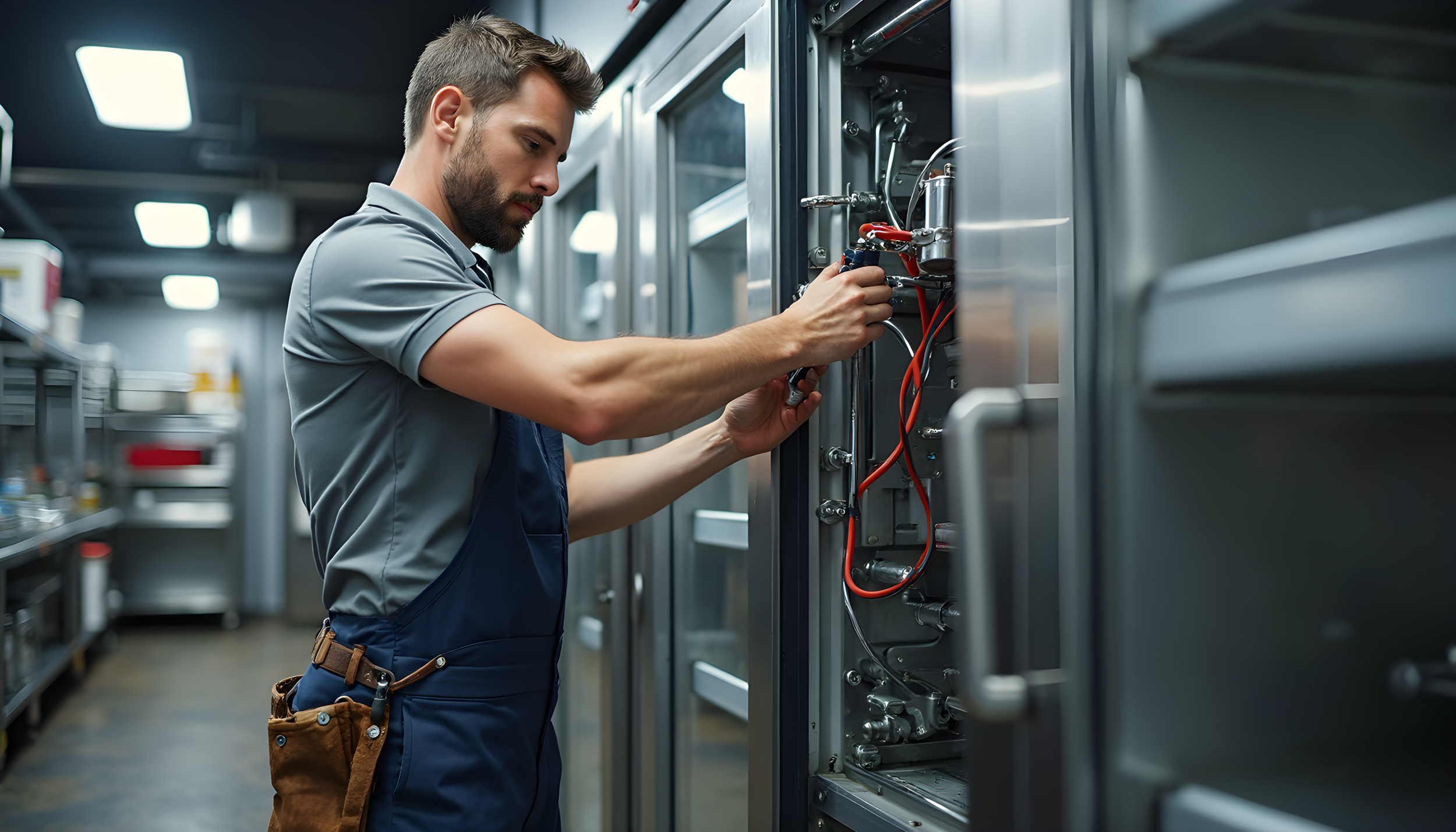
Every walk-in cooler eventually reaches a point where the smarter money stops going into repairs. A compressor fails, the panels start to sweat, the energy bill creeps up, and you are left with the question every food business faces sooner or later: do we keep fixing this unit, or is it time to replace it? This guide walks through how to make that call with confidence, and what a custom replacement build actually involves.
Repair, retrofit, or replace: the real question
Most walk-in cooler decisions are not simply "fix it" or "scrap it." There are three paths: a straightforward repair for a one-off fault, a retrofit that modernizes part of the system, or a full replacement build sized to how your business runs today. The right choice depends on the age of the unit, how often it fails, what it costs to run, and whether it still fits your operation. Titan Walk-In Coolers designs, builds, and installs custom walk-in coolers and freezers, so we look at every unit through the lens of long-term value rather than the next service call.
Signs your walk-in cooler is nearing the end of its life
A single breakdown rarely means you need a new cooler. A pattern of them usually does. Watch for these signals.
Temperature control problems
If your cooler struggles to hold a steady temperature, cycles hard, or drifts warm during busy periods, the system is working harder than it should. Occasional swings can be a simple fix. Constant swings on an older unit, even after service, often point to a system that has aged past its efficient life. Unstable temperatures also put your inventory at risk, which is the most expensive problem of all.
Rising energy costs
Older refrigeration and thin, worn insulation force the system to run longer to hold temperature. If your energy bills keep climbing while your usage stays flat, the cooler itself is likely the cause. A modern, well-insulated build with efficient refrigeration can noticeably lower running costs, which shifts the repair-versus-replace math toward replacement.
Structural wear: panels, seals, and corrosion
Delaminating panels, doors that no longer seal, failing gaskets, and rust or corrosion all let cold air escape and warm, humid air in. Once the shell itself is compromised, you are paying to cool the room around the cooler. Seals and gaskets are a repair. A failing shell is a replacement.
You have outgrown the space
If your cooler is packed to the door, blocking airflow, or you are renting extra cold storage to keep up, the unit no longer fits your business. Replacing it with a custom build sized to your product load and workflow solves a capacity problem that no repair can fix.
When a repair still makes sense
Replacement is not always the answer. A newer cooler with a single failed component, a worn door gasket, or a one-time refrigerant issue is usually worth fixing. If the shell is sound, the unit is efficient, and breakdowns are rare, a targeted fix is the sensible move. The turning point comes when fixes become frequent, when parts for an older system get hard to source, or when the money spent servicing the unit starts to rival the cost of a build that would run reliably for years.
Retrofits and modernization: the middle path
Between a quick fix and a full replacement sits the retrofit. If the structure of your cooler is still solid but the refrigeration is dated or inefficient, upgrading the refrigeration, adding energy-efficient components, or replacing doors and panels can extend the unit's life and cut running costs without a complete rebuild. Retrofits work best when the shell is worth keeping. When it is not, a replacement build is the cleaner long-term investment.
When replacement is the smart investment
Replacing a walk-in cooler is a bigger decision up front, but it often costs less over time. A custom-built unit gives you efficient refrigeration, proper insulation, stable temperatures, and a shell built to last, all sized to your space and product load. It ends the cycle of recurring service calls, protects your inventory, and typically lowers energy costs. For most businesses running an aging or failing unit, a purpose-built custom walk-in cooler or freezer is the option that pays for itself.
What a custom replacement build involves
A replacement is not just swapping one box for another. Titan handles the full project from start to finish: a site survey to measure your space and needs, custom panel fabrication, refrigeration sized to your load, electrical coordination, and professional installation and commissioning. Whether you need a straight replacement, a larger unit, or custom cold storage and refrigerated warehousing, every build is engineered for energy efficiency and long-term reliability and backed by our workmanship warranty. With 500+ installs completed since 2013, businesses across Toronto, the GTA, and Southern Ontario trust Titan to get the build right the first time.
Repair vs. replace: a quick decision framework
Use this as a starting point, then talk it through with a builder who can assess the unit in person.
Lean toward repair if the unit is relatively new, the shell is sound, the fault is isolated, and breakdowns are rare.
Consider a retrofit if the structure is solid but the refrigeration is dated or your energy costs keep climbing.
Lean toward replacement if the cooler fails often, holds temperature poorly, costs more to run every year, has a worn or corroded shell, or no longer fits your operation.
Frequently asked questions
Is it cheaper to repair or replace a walk-in cooler?
For a newer unit with an isolated fault, a repair is usually cheaper. For an older unit that fails often, runs inefficiently, or has a worn shell, replacement is frequently the better value once you factor in energy savings, protected inventory, and the end of recurring service costs.
How long does a walk-in cooler last?
A well-built, well-maintained walk-in cooler can run for many years, but efficiency declines as insulation and components age. Once a unit is well into its service life and needing regular attention, a custom replacement build often makes more financial sense than continued fixes.
Can I replace only part of my walk-in cooler?
Sometimes. If the shell is sound, a retrofit that upgrades the refrigeration or replaces doors and panels can modernize the unit. If the structure itself is failing, a full replacement build is the more reliable path.
Can Titan build a replacement sized to my existing space?
Yes. Every Titan build starts with a site survey, and units are custom fabricated to fit your space, product load, and workflow. If your old cooler no longer keeps up, we can size the replacement to where your business is headed.
Talk to Titan about a replacement build
If your walk-in cooler is costing more to keep running than it is worth, a custom replacement is the reliable long-term fix. See how our installation process works or request a free quote, and we will help you decide whether to repair, retrofit, or replace.