
Walk In Cooler Door Gasket: Repair or Rebuild the Opening?
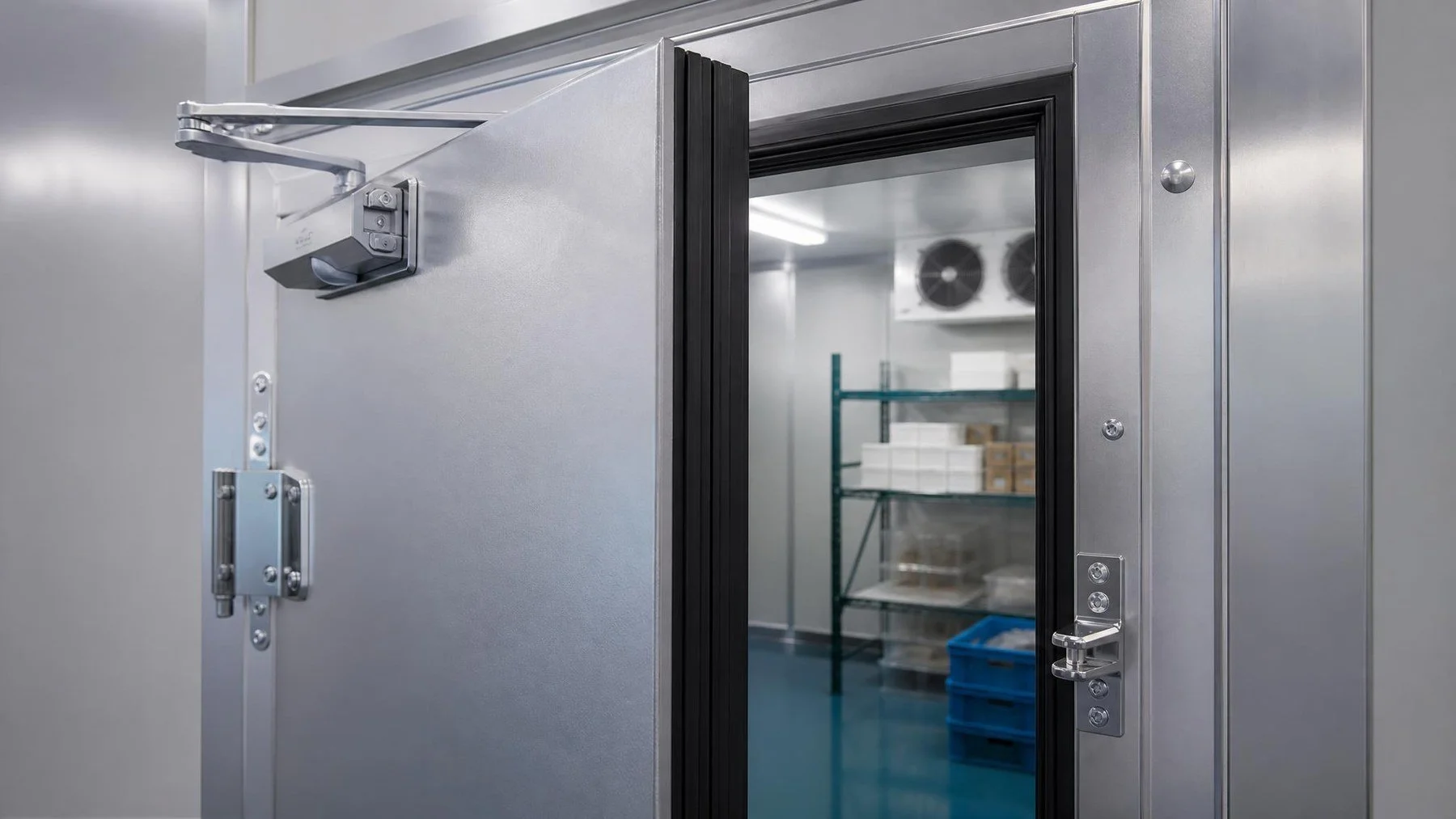
Illustrative cooler door detail. Inspect the real gasket, frame and hardware before choosing a scope.
A walk in cooler door gasket is meant to seal when the door closes. If you can see a gap, feel air moving at the edge or find the seal torn, replacing it may be part of the answer. But a new gasket will not correct a door that hangs out of square or gets struck by carts every shift. Before choosing a part, find out why the seal failed and whether the opening still works for your operation. Titan builds and supplies cooler door options. A qualified installer should check the existing seal and alignment before anyone orders a replacement part or door.
For a Toronto operation, Titan's walk in cooler work can address the door as part of the complete room, while a focused inspection determines whether the present opening needs a smaller repair.
Separate the seal from the door problem
Inspect the whole perimeter with the door closed. A split or compressed gasket is visible evidence about the seal. Then check whether the door closes fully without a staff member pulling it into position. Look at the hinge, closer, latch, threshold and frame. If one edge is tight and the opposite edge stands away, replacing the gasket alone may leave the original alignment problem in place.
Watch the door during a normal delivery or prep period. Does a cart clip the frame? Does staff prop the door open because the stock route is awkward? Does the latch become hard to use when the room is busy? These observations tell you whether the opening, traffic pattern or hardware needs attention. A room can have a good panel enclosure and still lose performance through the busiest doorway.
Record what you see without diagnosing refrigeration from the gasket alone. Warm readings can have several causes, including door traffic, equipment condition and how stock is loaded. If the room is not holding its intended temperature, arrange the appropriate qualified inspection. Titan's cooler and freezer door options help frame the enclosure decision. They do not replace an equipment assessment.
Make the inspection repeatable. Note when the gap appears, whether it is present with the latch engaged, and whether the door behaves differently after a delivery period. Take close photographs of each edge and a wider photograph that shows the surrounding frame. One image of a torn gasket proves the tear exists. It does not show whether the frame is square or the door closes under normal use. Those wider observations help the installer separate a worn part from an opening problem.
Choose the narrowest durable scope
There is a practical sequence. If the door, frame and hardware are sound and the gasket is damaged, specify a compatible replacement seal and confirm it closes evenly after installation. If the closer or hinges are worn, include them in the same work rather than leaving the new gasket to compensate for a misaligned door. If the frame is damaged or the opening is too narrow for the equipment that now passes through it, discuss a new door assembly or a revised opening.
Titan supplies and installs hinged and sliding doors for existing walk ins as well as new builds. A sliding assembly is worth discussing where a swinging door takes up too much aisle space. That is a layout choice, not an automatic upgrade for every damaged seal. Ask for the reason the proposed door type fits the opening and the daily traffic before comparing it with a narrower hardware repair.
For a freezer, the assessment may involve additional details at the threshold and around the opening. Do not substitute a cooler door assumption for a freezer door specification. Ask the installer to identify the existing door model, dimensions, operating temperature and any hardware that needs to be retained or replaced. The quote should make those choices visible.
For a freezer that sticks or accumulates ice at the opening, photograph where it happens and ask the installer to inspect the door and its specified heater components. Titan offers heated freezer doors, but the photograph does not establish the cause by itself.
When the layout damages a new seal
This is also the moment to question whether the room's layout is creating the damage. Moving a shelf, changing the stock route or choosing a door sized for carts can reduce repeated impacts. A door replacement without that operating change may return the room to the same problem. When Titan plans a custom walk in cooler, the opening is part of the storage and movement plan, not a late accessory.
Walk a loaded cart through the entrance while someone observes where it turns. If staff angle the cart sharply to clear a shelf, the collision point may be easy to see. Repositioning nearby storage or changing the traffic route may be more useful than adding a stronger seal to the same vulnerable edge. If the doorway itself is too small for regular equipment, include that fact in the room plan before choosing a replacement door. The fix should match the movement through the opening.
Check the result under normal use
A door can look correct while the room is empty and behave differently during the next delivery. After the work, check that staff can open it with a loaded cart, that it closes on its own as specified, and that the gasket contacts evenly. Continue normal temperature monitoring rather than treating a new part as proof the whole system is performing. If problems persist, investigate the wider room and refrigeration system.
Keep the original photographs and compare them with the finished opening after a normal shift. If a cart still strikes the edge or the latch remains awkward, report that while the installation details are fresh.
Ask the quote to list what is outside the door scope as well. A replacement assembly may require work around the surrounding panels or threshold. A gasket only job should not be mistaken for a guarantee about the whole cold room. Clear boundaries help the owner compare a focused repair with a broader enclosure project and understand who will inspect temperature performance if it remains a concern.
Make the repair decision from a complete opening record
A useful inspection record shows more than a single damaged corner. Photograph the closed door from the room side and the outside, then capture the gasket, threshold, hinge side, latch side and frame. Record the door type, dimensions and the way the room is used. If the problem appears mainly during deliveries, note the cart and product route. If the door is difficult to close at any time, record that separately. These details help the installer decide whether the condition is local to the seal or connected to alignment, hardware or traffic.
Ask staff what they do when the door resists normal use. Do they pull it shut a second time, move a rack before it can close, or leave it open during repeated stock trips? Those are observations about the workflow, not a diagnosis of equipment performance. The answer matters because a new seal can be damaged again if the same cart strikes the same edge every shift. A practical repair may include changing the route or storage position near the entrance.
When comparing proposals, ask each provider to identify the part or assembly being replaced, the surrounding components being inspected, and the condition expected after the work. A gasket quote should name the compatible seal and how even contact will be checked. A hardware scope should explain the closer, hinge or latch work. A complete door scope should show the opening dimensions, required adjacent work and the reason replacement is preferred to repair. These are different jobs. Comparing only their total prices obscures the decision.
The room's operating condition remains a separate question. If temperatures are outside the business's intended range, arrange a qualified assessment of the whole system and keep following the site's food safety procedures. A torn gasket can be one factor, but a photograph cannot prove the cause of a temperature problem. After the door work, continue the normal monitoring record and ask the technician what further checks are needed if performance does not improve.
For an existing freezer opening, note any ice or sticking at the threshold and ask which components the selected door specification requires. Do not assume a cooler gasket and a freezer door use the same details. For a room under renovation, check whether the new floor height, nearby shelving or traffic route changes the opening. Fixing the visible seal while the surrounding site is about to change can leave the new work exposed to another fit problem.
If a qualified technician finds that the whole door or opening needs replacement, send Titan the room details and daily traffic through the quote form. Ask for a door or enclosure scope based on that finding.