
Walk-In Cooler Panels and Insulation: What Your Build Actually Needs
Every walk-in cooler is really a box of panels. The compressor gets the attention, but the panels decide how well the room holds temperature, how much power it burns, and how long the build lasts. If you are planning a cooler or freezer for your food business, the panels are where the quality of the whole project gets set.
Titan builds and installs walk-in coolers and freezers across Toronto, the GTA, and Southern Ontario, with more than 500 installs since 2013. Here is what we look at when we spec panels for a build.
What a walk-in cooler panel actually is
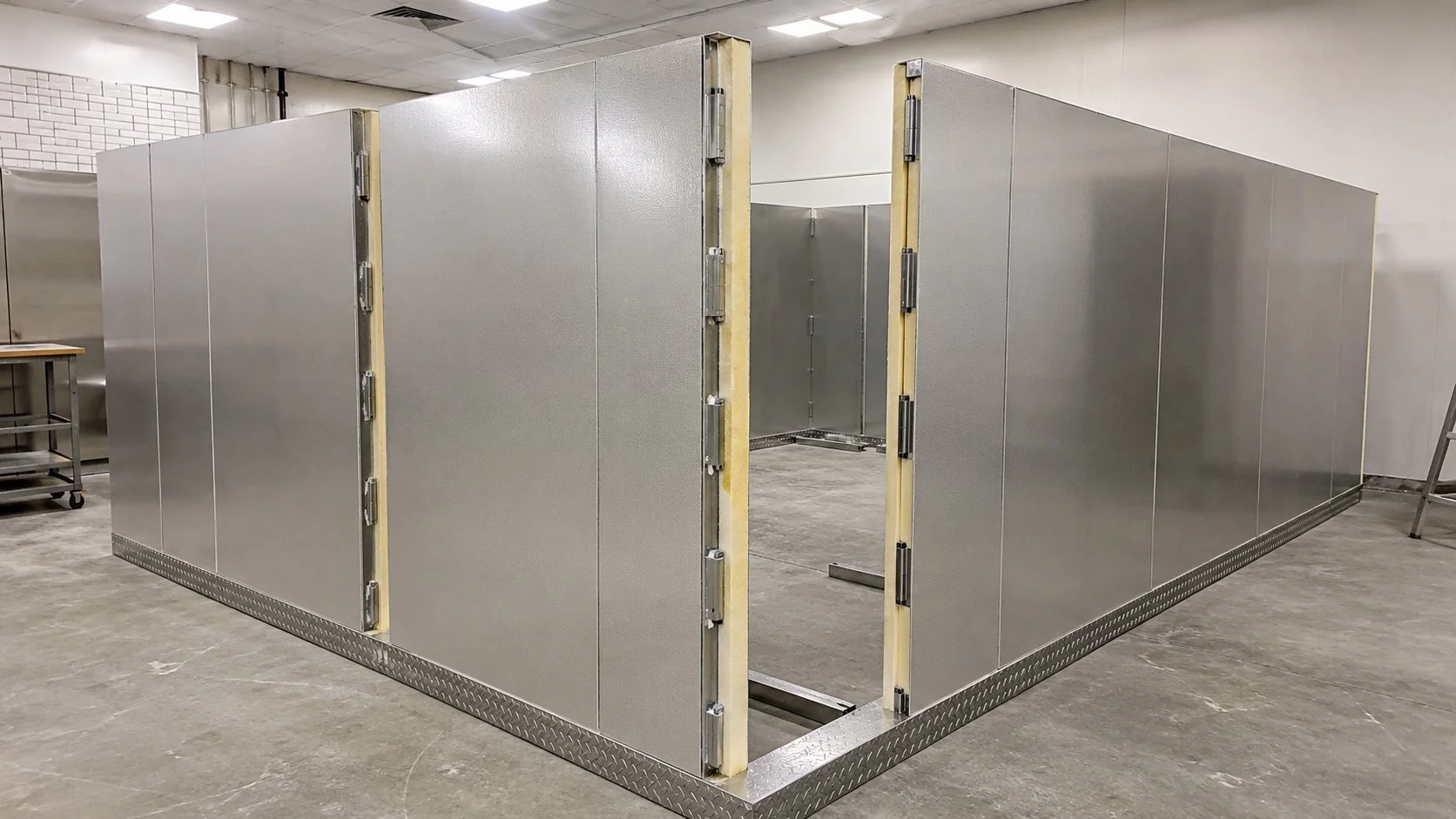
A walk-in cooler panel is a sandwich. Two metal faces, usually galvanized steel, stainless steel, or aluminum, wrap around a rigid foam insulation core. The panels lock together to form the walls, ceiling, and often the floor of the room.
The job of the panel is simple. Keep the cold in, keep the heat out, and stay sealed for years while carts bump into it and staff move stock in and out every day.
The insulation core does the real work
The core is where the temperature control happens. Most commercial panels use polyurethane foam because it insulates well for its thickness. The insulation value is measured in R value. A higher R value means the panel resists heat transfer better, which means your refrigeration system runs less to hold the same temperature.
A cooler holding produce above freezing and a freezer holding stock well below zero do not need the same panel. Freezer panels are thicker because the temperature difference between the room and your building is much larger.
The metal skin takes the abuse
The faces of the panel deal with everything else. Stainless steel stands up to washdowns and impacts, which is why it shows up in busy kitchens and butcher shops. Galvanized steel keeps the cost down in spaces that see lighter contact. The right choice depends on how hard your team works the room.
Why cam lock panels make better builds
The way panels join matters as much as the panels themselves. Cam lock cold room panels use a locking mechanism built into the panel edge. Turn the cam, and the panels pull tight against each other with the gasket compressed.
That gives you three things. A tight seal that keeps cold air in. A room that goes up fast, because panels lock instead of being fastened piece by piece. And a build you can take apart, which matters if you ever expand, reconfigure, or relocate.
Sealed seams are the difference between cold and almost cold
Gaps at the seams are where coolers fail quietly. Warm moist air leaks in, the refrigeration runs longer, ice forms where it should not, and your power bill creeps up. A properly locked and gasketed seam avoids all of it. This is also why panel assembly belongs in a professional walk-in cooler installation, where every seam gets checked before the refrigeration is commissioned.
Matching panels to your use case
There is no single right panel. There is a right panel for your room.
A cafe cooler that holds dairy and produce has one set of needs. A butcher shop cold room that hangs meat has another. A freezer that holds frozen stock for a warehouse needs the thickest walls, a floor rated for the load, and doors that seal hard. If you need both fresh and frozen storage, custom walk-in freezers and cooler-freezer combos use different panel specs for each zone in one build.
Floors, ceilings, and doors are panels too
The walls get the attention, but the floor takes the load. A cooler where staff walk in with carts needs an insulated floor panel with a wear surface that handles the traffic. Heavy pallet loads need floor builds rated for the weight. The ceiling panels need to span the room without sagging, and the door is the hardest working panel in the room. It moves thousands of times a year and still has to seal every time.
What to ask before you buy panels
If you are comparing quotes or thinking about a kit, ask these questions. What is the insulation core and its R value? How thick are the panels for the temperature I need to hold? How do the panels join, and is the seam gasketed? What is the metal facing on each side? Is the floor panel rated for my loading? Who assembles it, and who stands behind the seal?
The answers tell you whether you are buying a room that holds temperature for years or a box that fights you from month one.
FAQ
What are walk-in cooler panels made of?
Most commercial panels are a rigid foam insulation core, usually polyurethane, faced on both sides with metal such as stainless steel, galvanized steel, or aluminum. The panels lock together to form the walls, ceiling, and floor of the room.
How thick should walk-in cooler panels be?
It depends on the temperature you need to hold. Freezers need thicker panels than coolers because the temperature difference is larger. The right thickness for your build comes from the temperature target, the room size, and where the unit sits in your building.
What are cam lock panels?
Cam lock panels have a locking mechanism built into the panel edge. Turning the cam pulls neighbouring panels tight together over a gasket, which gives a fast assembly and a tight seal, and lets the room be disassembled later if you expand or relocate.
Do walk-in coolers need an insulated floor?
Most do. An insulated floor panel keeps the cold in and gives you a cleanable surface rated for your traffic. Some ground floor installs on a suitable slab can work without one, which is a call your installer makes at the site survey.
Can I buy panels and assemble a cooler myself?
You can buy panels, but the seal is the hard part. Gaps at seams, doors, and penetrations cost you temperature control and power every day the room runs. A professional install includes panel assembly, sealing, and refrigeration commissioning as one scope.
Do you supply just the panels?
Yes. Titan supplies cam lock cold room panels for projects across Ontario, and we also design, build, and install complete rooms. Tell us what you are building and we will scope it.
Planning a cooler, freezer, or cold room build? Titan supplies cam lock panels and builds complete walk-in coolers and freezers across Toronto, the GTA, and Southern Ontario, with more than 500 installs since 2013. Request a free quote or call (416) 896-7153.