
DIY Walk-In Cooler vs Professional Build: What to Know Before You Start
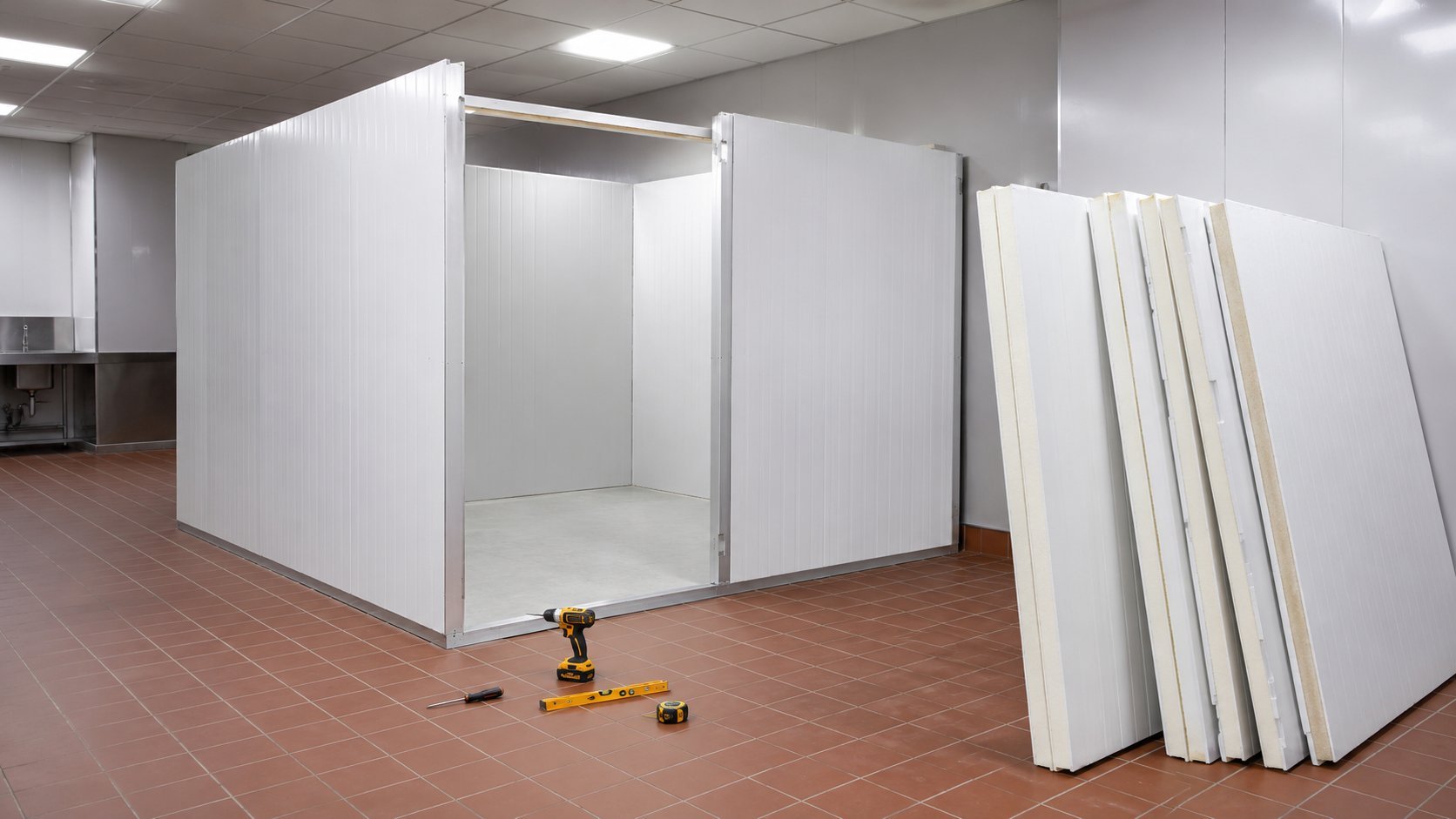
Plenty of business owners look at a walk-in cooler and think they can build it themselves. Some can. The internet is full of DIY cooler builds, and for a shed project or a hobby setup, some of them work. Our own DIY walk-in cooler guide is one of the most read pages on this site.
But a cooler for a food business is a different animal. It has to hold a safe temperature every hour of every day, pass inspections, and not burn money through leaky seams. Here is an honest look at where DIY makes sense, where it does not, and what a professional build gets you.
What the DIY route really involves
Building your own walk-in cooler means sourcing panels, cutting and sealing them into a room, hanging a door that seals, installing a refrigeration system sized to the space, running the electrical, and commissioning the whole thing so it holds temperature.
Each step is doable. The problem is that each step also has a failure mode you may not see for months. A seam that leaks warm air. A compressor that short cycles because it is oversized. A floor that sweats. Condensation where the vapour barrier was missed.
The seal is the hard part
Amateur builds usually fail at the seams, not the panels. Warm moist air finds every gap, and the results show up as ice buildup, wet walls, spoiled stock, and a refrigeration system that runs constantly. Purpose-made cam lock panels exist because a compressed gasket seam beats caulk and hope. We cover how the panels themselves work in our guide to panels and insulation.
Refrigeration sizing is not guesswork
The refrigeration system has to match the room volume, the insulation, the door traffic, and the product load. Undersize it and the room never reaches temperature on a hot day. Oversize it and it short cycles, which wears the compressor and holds humidity in the room. Professionals size systems from the build spec, not from what happens to be for sale.
What a business risks with DIY
For a home project, a cooler that runs warm is an annoyance. For a food business it is stock loss and a compliance problem. Ontario food premises rules require hazardous food held cold, and an inspector will check your temperatures, not your build story.
There is also the daily cost nobody sees. A leaky room can run its compressor far more than a sealed one, and that difference lands on your hydro bill every month for the life of the unit. A cheap build can end up the expensive option.
Insurance and inspections
Commercial refrigeration ties into your building's electrical and sometimes its structure. Work that is not done and documented properly can create problems with inspections and insurance claims. A professional build gives you a documented scope: survey, build, electrical, commissioning.
What a professional build includes
A complete professional walk-in cooler installation is more than assembly. It starts with a site survey that checks your space, access, power, and drainage. The room is designed to your floor plan and use case. Panels are assembled and sealed as a system. The refrigeration is sized, installed, and commissioned so the room holds its target temperature from day one. And someone stands behind the result.
That last point is the real difference. When a professional builds your cooler, temperature problems are their problem to solve, not yours to live with.
When DIY makes sense, and when it does not
If you are building a cold room for personal use, a hunting camp, or an experiment, DIY can be a fine project. Take your time with the seal and be honest about the refrigeration.
If the room protects stock you sell, holds food the public eats, or sits inside a building you lease or insure, build it professionally. The gap between the two paths is not the panels. It is everything around them.
FAQ
Can you build your own walk-in cooler?
Yes, and for hobby or personal use it can be a reasonable project. For a food business the stakes change: the room has to hold safe temperatures around the clock and pass inspection, which is why commercial builds are done professionally.
What is the hardest part of a DIY walk-in cooler?
The seal. Panels are easy to buy, but seams, doors, and penetrations that leak warm moist air cause ice, condensation, spoilage, and high power use. Refrigeration sizing is the other common failure.
Is a DIY walk-in cooler cheaper?
Upfront, usually. Over the life of the unit, often not. Leaky seams and mis-sized refrigeration raise running costs every month, and stock loss from a temperature failure can erase the savings in one incident.
What does a professional walk-in cooler installation include?
Site survey, design to your floor plan, panel assembly and sealing, refrigeration sizing and installation, electrical connection, and commissioning so the room holds its target temperature from day one.
How long does a professional build take?
The room itself usually goes up fast once fabrication is done. The timeline is set by the design, fabrication, and your site conditions, and it gets confirmed in your quote.
Do you work with businesses that started a DIY build?
Yes. Tell us where the project stands and we will scope what it takes to finish it properly.
Weighing a DIY build against doing it once, properly? Titan designs, builds, and installs walk-in coolers and freezers across Toronto, the GTA, and Southern Ontario, with 500+ installs since 2013. Request a free quote or call (416) 896-7153.