
Walk-In Cooler Food Safety Compliance in Ontario: A Practical Guide
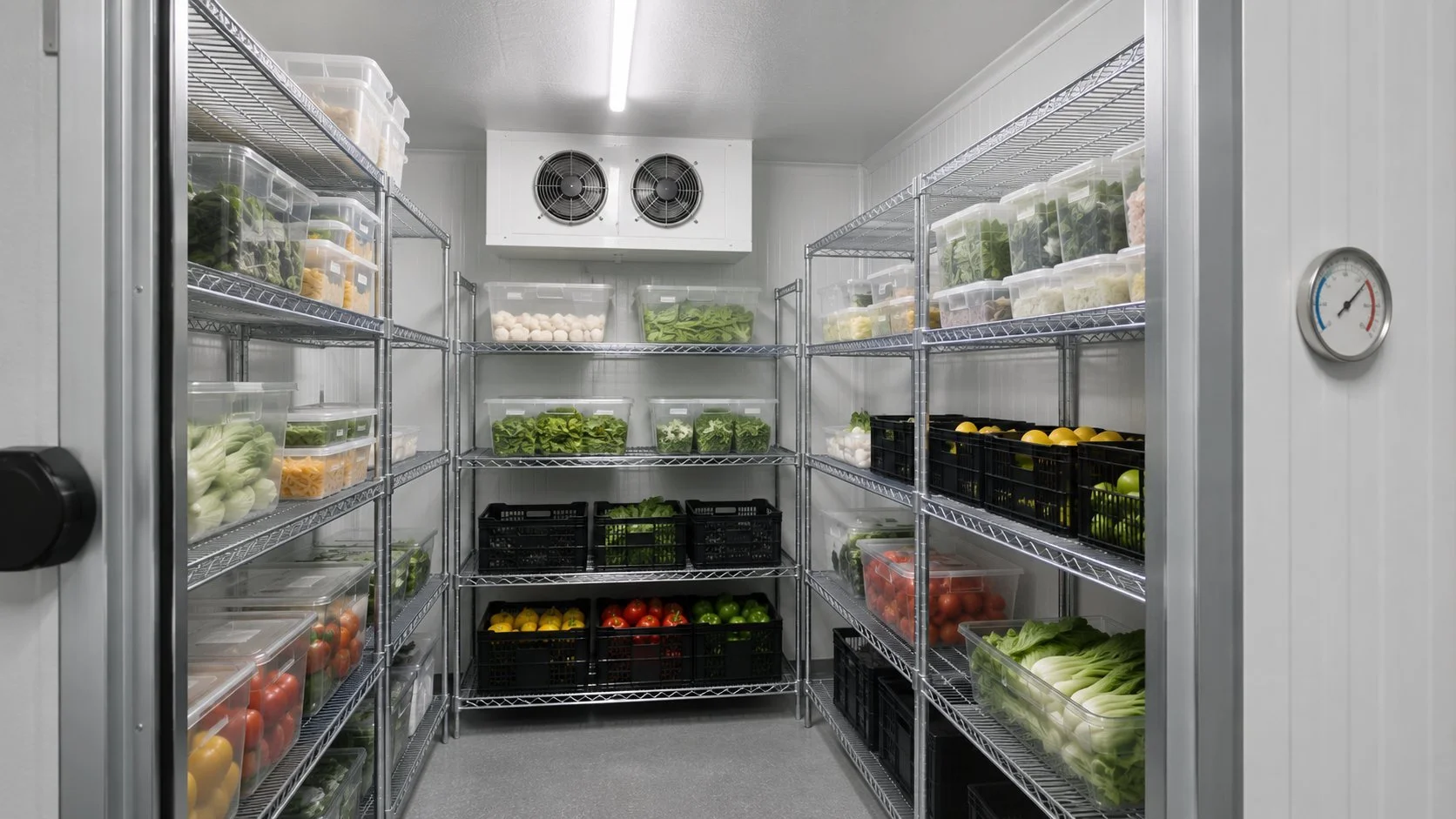
If you run a food business in Ontario, your walk-in cooler is not just equipment. It is the thing standing between your stock and a failed inspection. Public health inspectors check temperatures, storage practices, and cleanliness, and the cooler is where all three meet.
The good news is that compliance is mostly a design problem. A cooler built and installed properly makes the rules easy to follow every day. Here is what the rules ask of you, and how the build itself does the heavy lifting. Titan has built cold storage for restaurants, grocers, butchers, and processors across Ontario since 2013.
What Ontario requires from your cold storage
Ontario's Food Premises Regulation (O. Reg. 493/17) sets the baseline for anyone serving or selling food. For cold storage, the core requirements are simple to state. Hazardous foods must be held at 4 degrees Celsius or colder. Frozen food must be held at minus 18 or colder. You need accurate thermometers in every cold holding unit, and the premises, including your cooler, must be kept clean and in good repair.
Simple to state is not the same as easy to hold. A cooler that struggles on hot days, recovers slowly after deliveries, or reads warm at the door and cold at the back makes those numbers a daily fight.
The temperatures inspectors look for
Inspectors check that cold holding sits at or below 4 degrees and frozen holding at or below minus 18. They look at your thermometers and often at your temperature logs. If your unit cannot hold those numbers under real use, with staff in and out and stock rotating, that is a build problem, not a staff problem.
How the build determines compliance
A cooler holds temperature because of insulation, sealing, refrigeration sizing, and airflow. Thick, well-sealed panels keep the cold in. A refrigeration system sized to the room and its door traffic recovers quickly after the door swings. Good airflow keeps the temperature even from front to back, so the reading on the thermometer matches the product on every shelf.
This is why professional installation matters for compliance. Commissioning proves the room holds its numbers before you load stock into it.
Surfaces, drains, and cleanability
The regulation also cares about cleanliness. Smooth, washable interior surfaces, sealed seams that do not trap grime, and floors that drain properly all make the daily cleaning regime workable. Meat businesses have the highest bar here, which is why walk-in coolers for butcher shops get specced with washdown-ready surfaces and drainage from the start.
Storage layout that passes inspection
Inside the room, layout is the other half of compliance. Raw meat stored below ready-to-eat food so nothing drips down. Product off the floor on shelving. Space for air to circulate. Labels and dates on stock, first in, first out.
We cover the day-to-day systems in our cooler organization and safety tips and the specifics of raw meat storage. The build supports all of it: enough room, the right shelving, and a door your team actually closes because it swings and seals properly.
A compliance checklist for your cooler
Run your current cooler against this list. Does it hold 4 degrees or colder in every zone, on hot days, during rush? Does frozen storage hold minus 18? Is there an accurate, visible thermometer? Do surfaces wash down easily? Does the floor drain? Is there enough shelving to keep raw and ready-to-eat separated? Does the door seal every time?
If any answer is no, fix it before an inspector finds it. Sometimes that is process. Often it is the build.
FAQ
What temperature must a walk-in cooler be in Ontario?
Hazardous food must be held at 4 degrees Celsius or colder, and frozen food at minus 18 or colder, under Ontario's Food Premises Regulation. Your cooler needs to hold those numbers under real daily use.
Do I need a thermometer in my walk-in cooler?
Yes. Every cold holding unit needs an accurate, visible thermometer, and many operators also keep temperature logs, which inspectors commonly ask to see.
Why does my cooler pass in the morning and run warm by afternoon?
Usually a capacity or sealing issue. Door traffic, deliveries, and hot weather all load the system, and a unit that is undersized or leaking air recovers too slowly. That is a build issue worth fixing before it becomes an inspection issue.
How should food be arranged in a walk-in cooler?
Raw meat below ready-to-eat food, everything off the floor, air space around stock, and first in, first out rotation with labels and dates.
What makes a cooler easy to keep clean?
Smooth washable surfaces, sealed seams, proper drainage, and shelving that lifts stock off the floor. Meat operations should spec washdown-ready interiors from day one.
Can Titan build a cooler to meet inspection requirements?
Yes. We design, build, and install walk-in coolers and freezers that hold their numbers, with surfaces and drainage matched to your use. Tell us what you store and we will spec it.
Want a cooler that makes compliance the easy part? Titan builds and installs walk-in coolers and freezers for Ontario food businesses, 500+ installs since 2013. Request a free quote or call (416) 896-7153.