
Indoor vs Outdoor Condensing Units for Walk-In Coolers
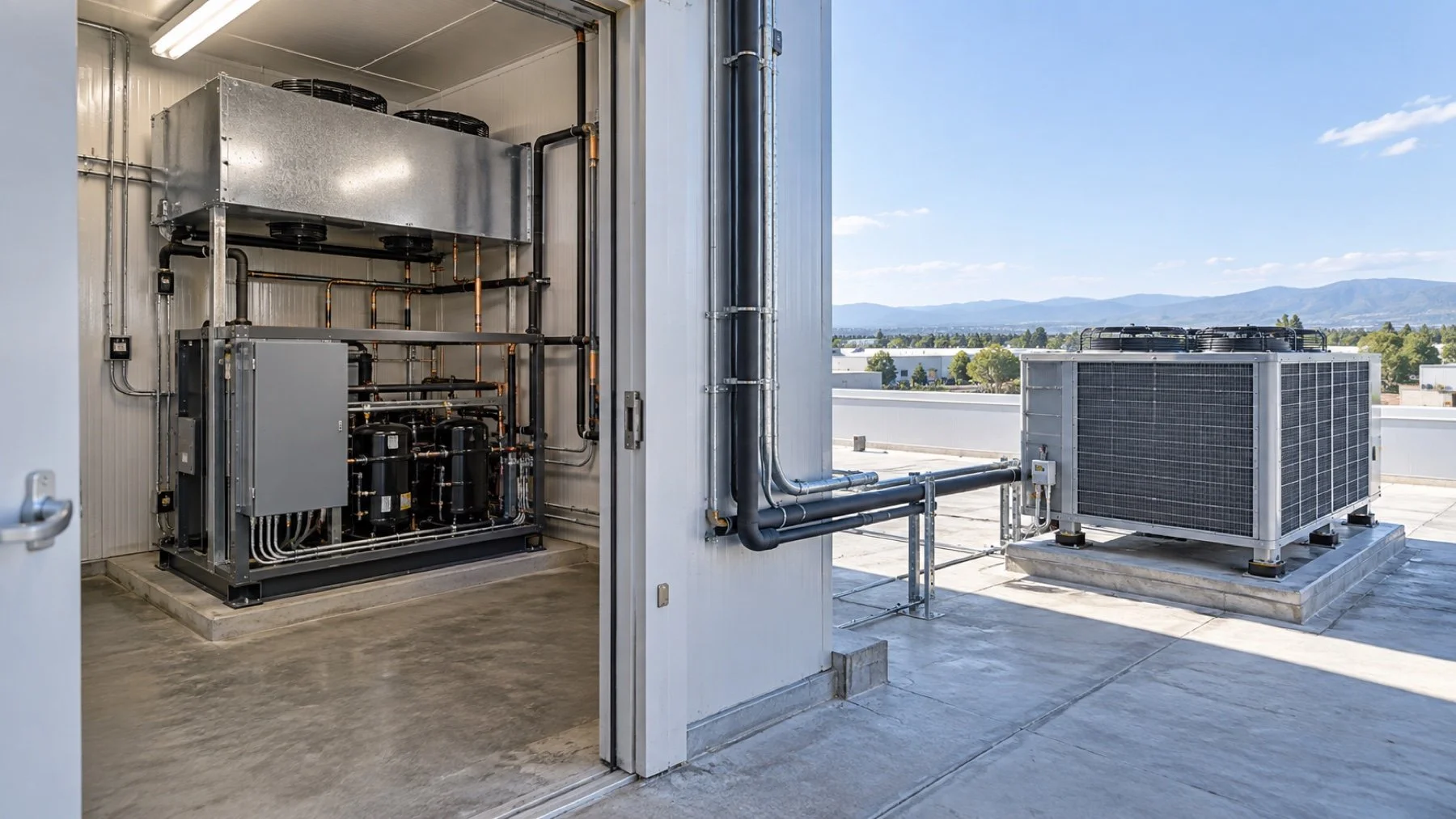
An indoor or outdoor condensing unit can run the same walk-in, but the location changes how the building handles heat, sound, weather and service. Titan plans condenser location with the enclosure and piping route so the choice works through a Southern Ontario summer and winter. Use this five-part scorecard before reserving equipment space.
- 1. Heat rejection: where can the building absorb it?
- 2. Weather: outdoor equipment needs outdoor provisions
- 3. Sound: distance helps only when placement is thoughtful
- 4. Service access: the best location stays reachable
- 5. Piping and electrical: measure the complete route
1. Heat rejection: where can the building absorb it?
An indoor condenser rejects the cooler's heat into the room that contains it. That room needs enough ventilation and temperature control to stay within the equipment rating. An outdoor unit keeps most condenser heat outside, which often helps a busy kitchen or compact production room.
2. Weather: outdoor equipment needs outdoor provisions
An outdoor label is only the start. The selected system must suit rain, snow, wind, summer design temperature and low-ambient operation. Mounting height, snow accumulation, coil exposure and drainage around the base all matter. Titan's outdoor walk-in cooler systems account for the enclosure and refrigeration location together.
3. Sound: distance helps only when placement is thoughtful
Moving a condenser outdoors can reduce indoor sound, yet a unit beside a patio, residence or office window creates another problem. Review property edges, neighbouring occupancies and the path of discharge air. Indoors, isolate vibration and avoid placing the unit over spaces that need quiet.
4. Service access: the best location stays reachable
Technicians need safe working clearance at coils, controls and compressors. A locked mechanical room may be easier to reach than a roof in winter. A ground-mounted outdoor unit may be easier than both, provided it is protected from vehicles, stored materials and drifting snow. Access must remain clear after the building is occupied.
5. Piping and electrical: measure the complete route
Longer pipe runs, vertical lifts, penetrations and electrical feeders change the job. The final choice should compare installed arrangements, not just two equipment prices. Map the route during the walk-in cooler installation survey, then match the equipment through Titan's commercial refrigeration installation service. Ask Titan to review the site before the location is locked in.
Source check: Outdoor units serve medium and low temperature walk-ins and require application-specific selection. Review Copeland X-Line outdoor units.
Condenser location questions
Can every condensing unit be installed outdoors?
No. The model, enclosure, controls and accessories must be approved for the intended outdoor conditions.
Why does an indoor condenser heat the room?
The condenser releases the heat removed from the walk-in plus heat added by the compressor.
What is low-ambient operation?
It is a control and equipment arrangement that lets the refrigeration system operate correctly when outdoor temperatures are low.
Is rooftop placement always best?
No. Roof structure, access, wind, snow, piping distance and service safety can make another location better.
When should condenser location be decided?
Decide it during design, before final panel openings, electrical routes and refrigerant piping are committed.
Confirm heat rejection, winter exposure, sound limits, service access and piping distance before equipment is ordered. Titan can review those constraints with the cooler and refrigeration package.