
Walk-In Freezer Defrost Systems: Electric, Off-Cycle and Hot Gas
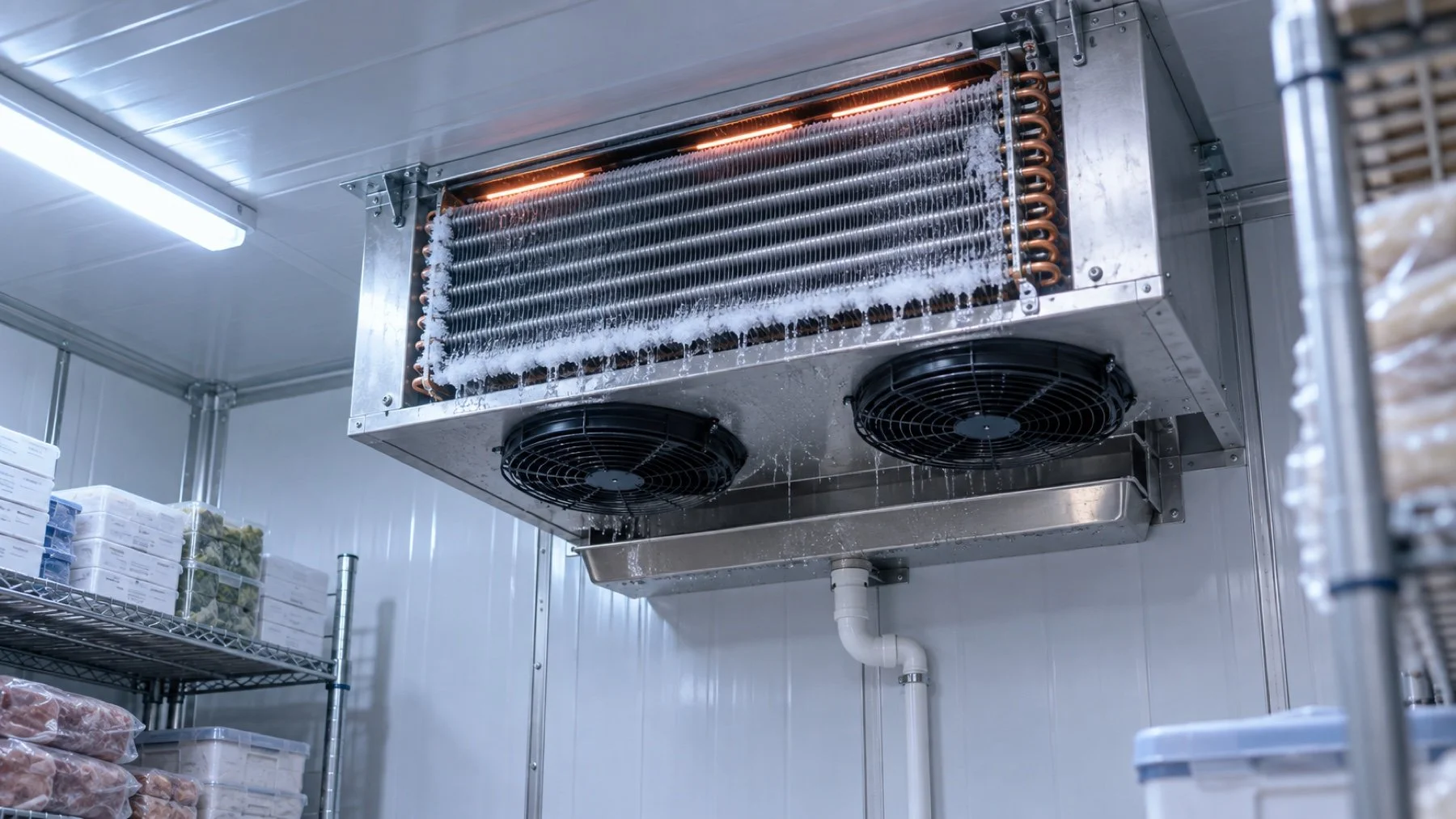
A walk-in freezer evaporator collects frost because moisture freezes on its cold surface. As frost builds, airflow and heat transfer fall. Defrost removes that ice on a controlled schedule. Electric, off-cycle and hot gas methods do this differently, and the right choice depends on room temperature, moisture load, system design and operating pattern.
Off-cycle defrost uses time and warmer air
The refrigeration cycle stops while evaporator fans may continue to move room air across the coil. This method can work for many above-freezing cooler applications because the surrounding air can melt the frost. It has limited usefulness for low-temperature freezers, where the room air cannot provide enough heat to clear ice reliably.
Electric defrost puts heat at the coil
Electric heaters warm the evaporator coil and drain pan during a defrost event. Controls stop refrigeration, manage the heaters, terminate defrost at the appropriate coil condition and delay fans until loose moisture will not be blown into the room. The approach is common and direct, but heater energy and added heat must be removed after each cycle.
Hot gas defrost uses heat from the refrigeration system
Hot discharge gas is routed through the evaporator to melt frost from within the coil. It can deliver fast, effective defrost in suitable systems. It also requires specific piping, valves, controls and commissioning. This is a system design decision, not a field shortcut that can be added to any freezer.
Controls matter as much as the heat source
A defrost that ends too early leaves ice. One that runs too long adds unnecessary heat and can release excess water or vapour. Termination temperature, fan delay, drainage and the interval between events must suit the coil and moisture entering through the door. Monitoring trends can reveal whether the schedule matches actual use.
Choose from freezer duty, not habit
Start with target temperature, evaporator model, door traffic, product moisture, operating hours and the complete refrigeration arrangement. Then select a method supported by the equipment manufacturer. Titan integrates the coil, controls and drainage when building custom walk-in freezers. You can also review walk-in freezer temperature monitoring before you discuss the freezer duty with Titan.
Defrost timing also affects the room after the heaters or hot gas stop. Fans may need to remain off while meltwater clears and the coil temperature falls. That delay keeps warm, moist air from being blown into the freezer. The exact sequence belongs in the selected controller and equipment documentation, not in a generic timer setting.
Source check: DOE maintains walk-in refrigeration standards and a specific hot gas defrost test procedure. Review DOE WICF program and hot gas defrost test procedure.
Defrost system questions
Why does ice form on a freezer evaporator?
Moisture entering the room freezes on the evaporator surface while the coil operates below freezing.
Can off-cycle defrost work in a walk-in freezer?
It is generally limited for low-temperature duty because the room air does not provide enough heat to melt frost reliably.
Does electric defrost warm the freezer?
It adds heat at the evaporator during the defrost period, and the refrigeration system removes that heat afterward.
Is hot gas defrost more complex?
Yes. It requires a refrigeration system designed with the necessary piping, valves and controls.
How is a defrost cycle ended?
Controls can end defrost using time, coil temperature or a coordinated strategy specified for the equipment.
Choose defrost around room temperature, frost load, operating hours and control needs. Titan can coordinate the evaporator, drain path and controls with a new freezer build.