
Walk-In Cooler Electrical Requirements for a New Installation
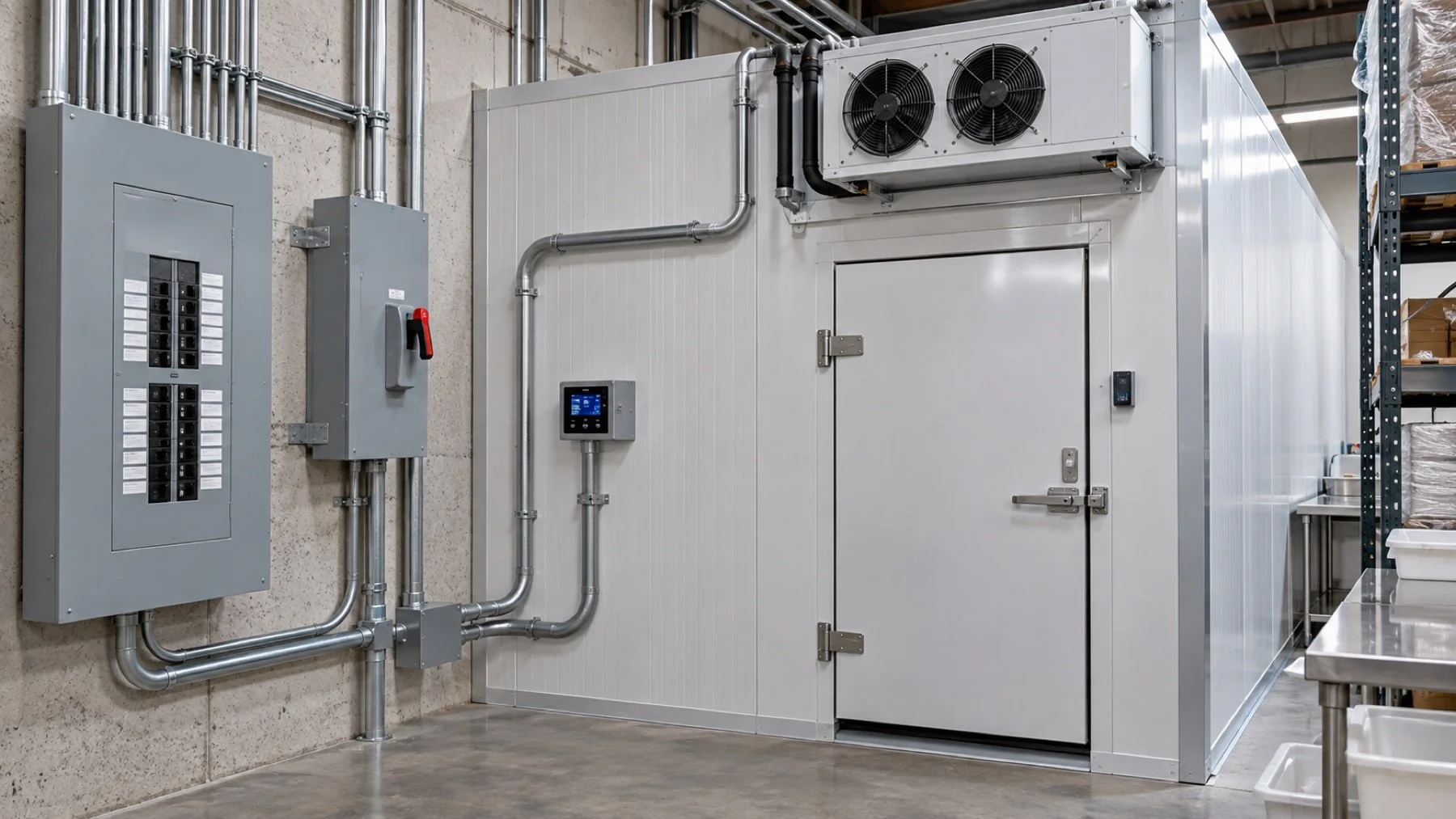
Walk-in cooler electrical requirements come from the equipment schedule, not a universal outlet count. The condensing unit, evaporator fans, controls, lights, door heaters and defrost components may need different voltages, disconnects or circuits. Titan coordinates the cooler and refrigeration package, while qualified electrical work must follow the approved equipment and Ontario requirements.
Build a load schedule before rough-in
List every powered component with its nameplate voltage, phase, frequency, rated current and overcurrent requirements. The condensing unit and evaporator are the obvious loads. Add lighting, controls, condensate or drain heaters, door and threshold heaters, pressure relief accessories and any monitoring system that belongs to the project.
Do not assume one feed powers the whole walk-in
Packaged equipment may combine some loads, while split systems often separate them. Freezer evaporators with electric defrost can create a substantial additional circuit requirement. The electrician needs the final submittals and wiring diagrams, not a preliminary equipment description.
Place disconnects and controls where they remain usable
Service personnel need a clear, accessible way to isolate equipment. Controls should be visible without putting sensitive components in a wet or damage-prone location. Coordinate panel penetrations so conduits, boxes and fasteners preserve the vapour seal and do not interfere with cam locks or door hardware.
Match approvals to the installed environment
Electrical equipment must carry an accepted approval marking and be suitable for the location. Moisture, cleaning, low temperature and outdoor exposure influence the enclosures and wiring methods required. Ontario's refrigeration mechanic training standard also identifies the installation, connection and testing of commercial refrigeration circuits and controls as a defined trade competency.
Freeze the electrical plan with the refrigeration selection
A late compressor or defrost change can invalidate the rough-in. Issue a coordinated equipment schedule, confirm available service capacity and verify the path before fabrication. Titan's walk-in cooler installation and commercial refrigeration installation pages show the integrated scope. Include any heated walk-in cooler doors, then send Titan the site details.
Create one equipment schedule that names every load, voltage, phase, full load current, disconnect location and control interface. Mark which values come from final nameplates and which remain design allowances. This lets the electrician, refrigeration contractor and general contractor resolve changes before conduit, panels and ceiling closures make them expensive. Keep the final schedule with the commissioning and handover records.
Source check: Ontario training covers commercial refrigeration electrical circuits, controls, components and testing. Review Ontario refrigeration mechanic regulation.
Electrical planning questions
What voltage does a walk-in cooler need?
It depends on the selected equipment. Read the final nameplates and submittals for every component.
Does the evaporator need its own circuit?
Sometimes. The wiring arrangement depends on the unit, controls and whether heaters or electric defrost are included.
Who should complete the electrical connection?
Use qualified trades working from approved equipment documents and the requirements that apply to the Ontario installation.
Do freezer doors use electricity?
Some freezer door and threshold assemblies include heaters, which must appear on the project load schedule.
When should electrical requirements be confirmed?
Confirm them before rough-in and recheck them when the final refrigeration and defrost equipment is selected.
Issue the final refrigeration equipment schedule to the electrical contractor before rough in. Titan can confirm the selected cooler equipment and installation interfaces for that coordination.