
Remote vs Self-Contained Walk-In Refrigeration Systems
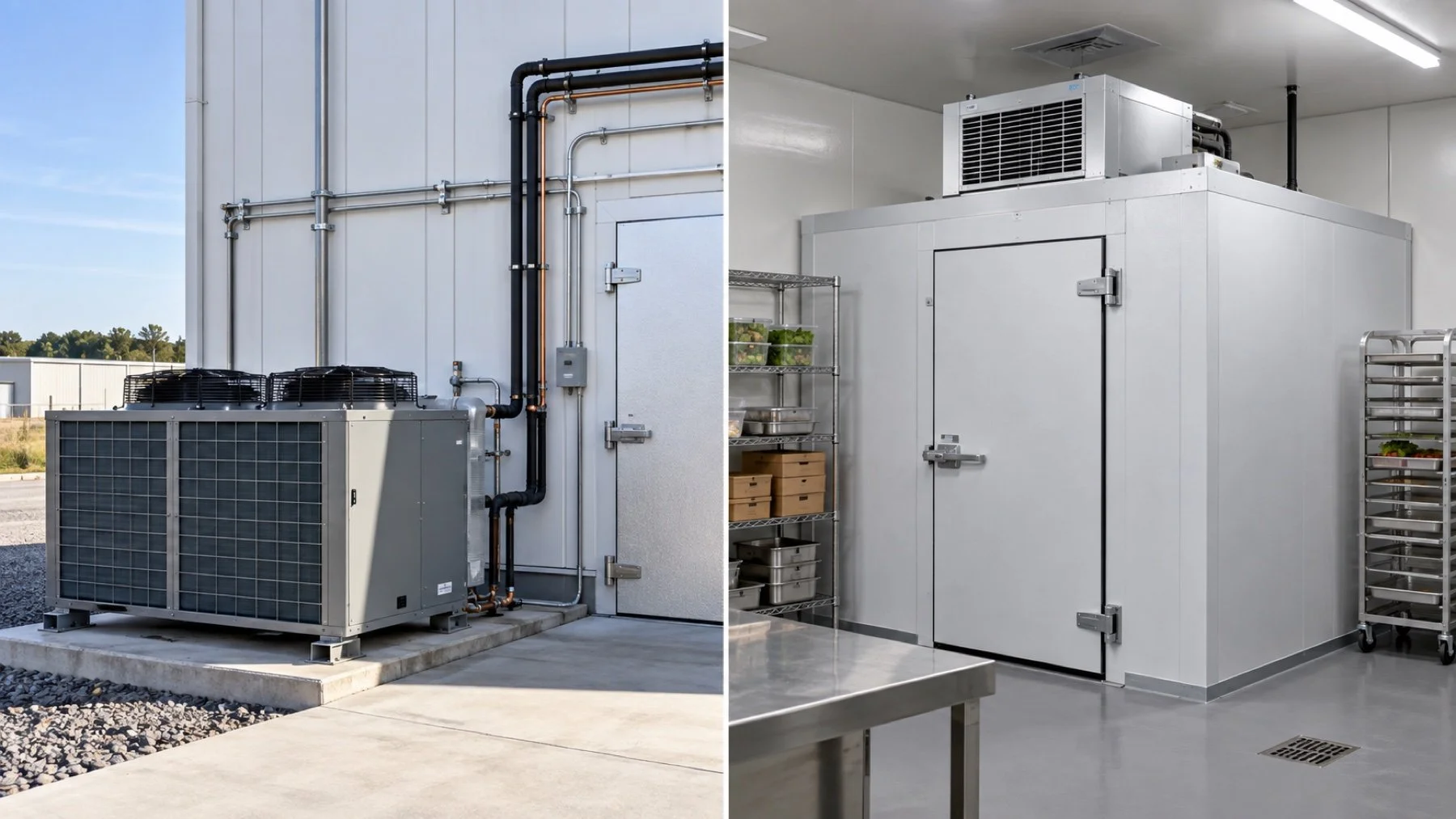
Remote and self-contained refrigeration can both serve a walk-in cooler. The practical difference is where the heat-producing components live. A self-contained package keeps the compressor, condenser and evaporator together at the box. A remote system moves the condensing unit away and connects it to the room evaporator. Titan compares the two by site fit, heat rejection, noise, access and installation work.
- Start with where the rejected heat will go
- Self-contained packages reduce field piping
- Remote systems separate the noisy work
- Compare access before comparing equipment price
- Choose the arrangement that fits the building
Start with where the rejected heat will go
A refrigeration system moves heat rather than making cold. With a self-contained package, condenser heat enters the space around the walk-in unless the package is specifically arranged to discharge elsewhere. That can be acceptable in a large, ventilated back room and uncomfortable in a tight kitchen. A remote condensing unit can reject that heat outdoors or in a suitable mechanical location.
Self-contained packages reduce field piping
A packaged system arrives as a coordinated assembly and can shorten field installation. It is useful where roof access is limited, refrigerant piping routes are difficult or the walk-in may need a compact solution. The tradeoff is concentration: sound, heat and service activity remain near the box. The surrounding room still needs enough clearance and ventilation for the equipment selected.
Remote systems separate the noisy work
Moving the compressor and condenser away can improve conditions around a kitchen, sales floor or preparation area. It also gives the designer more choice in evaporator placement and system capacity. In exchange, the project needs a planned piping route, electrical feeds, weather or low-ambient provisions where applicable, and service access at both ends.
Compare access before comparing equipment price
The better layout is the one a technician can safely reach without disrupting operations. A low first cost loses value when filters, coils or controls ar boxed in. Confirm roof rules, ladder access, clearances, condensate route, ceiling structure and working space during the site survey. Titan handles these dependencies as part of a complete refrigeration installation.
Choose the arrangement that fits the building
Use a self-contained package when compact installation and limited field piping matter most and the room can manage heat and sound. Use a remote arrangement when indoor heat, noise, capacity or equipment separation drives the project. For a new custom walk-in cooler build, settle this decision before finalizing panels and utilities. Contact Titan with a floor plan and site photos to start the comparison.
Source check: Walk-ins use self-contained or split-system arrangements. Review DOE commercial refrigeration research.
Remote and packaged system questions
What is a self-contained walk in refrigeration system?
It is a packaged assembly that keeps the main refrigeration components at the walk in rather than locating the condensing unit remotely.
Why choose a remote condensing unit?
It can move compressor noise and condenser heat away from occupied indoor areas and support more flexible equipment placement.
Does a remote system need more installation work?
Usually. It needs a refrigerant piping route, separate equipment mounting, electrical coordination and commissioning on site.
Can a remote unit be installed outdoors in Ontario?
Yes, when the selected equipment and controls are designed for the outdoor and low ambient conditions at that site.
Which option costs less?
There is no universal answer. Equipment, piping distance, structural access, electrical work and ventilation all affect installed cost.
Send Titan a floor plan, photos of the proposed equipment areas and any roof or landlord restrictions. That is enough to start a practical remote versus self contained review.