
Walk-In Cooler Refrigeration Load: What Determines System Size?
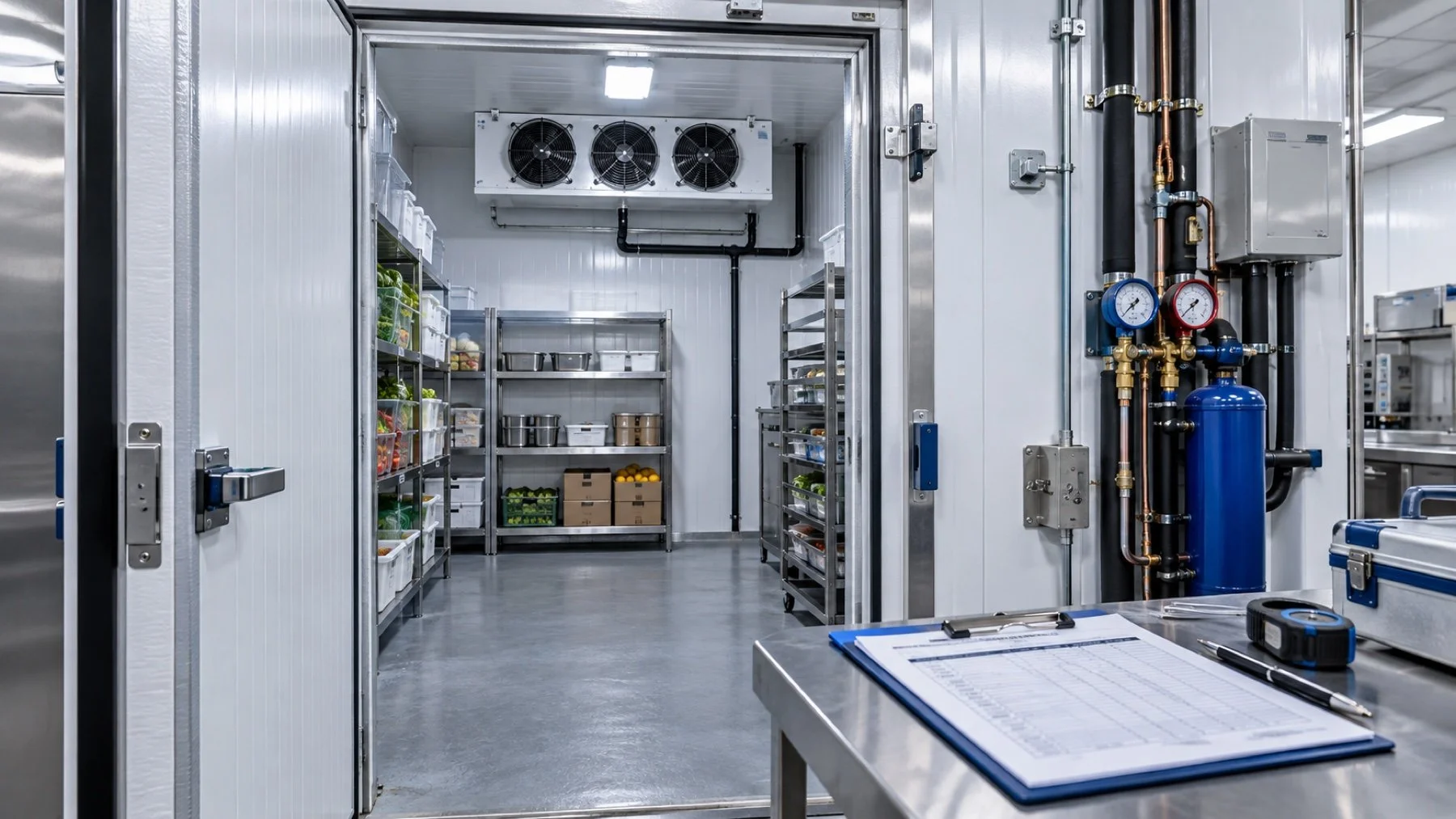
A walk-in cooler refrigeration load is the amount of heat the system must remove under real operating conditions. Box size matters, but it is only one input. Titan sizes complete systems across the GTA and Southern Ontario by looking at the enclosure, the room around it, the product going in, door traffic and the equipment that adds heat inside. This guide shows what belongs in that conversation before equipment is ordered.
The box sets the baseline, not the final answer
Surface area, insulation and temperature difference establish the transmission load. A larger room exposes more panel area, while a warmer surrounding space drives more heat through the envelope. An outdoor walk-in adds solar, wind and winter operating conditions to the design. Panel joints, floor construction and door seals also affect how closely the finished room performs to the calculation. The load discussion should therefore begin with measured dimensions and a confirmed panel package. Titan coordinates the box with the commercial refrigeration installation so the refrigeration is not selected in isolation.
Door openings can outweigh a quiet floor plan
Every door cycle exchanges cold, dry air with warmer, wetter air. A restaurant cooler opened throughout service behaves differently from a storage room entered twice per shift. Record the number of doors, clear opening, expected traffic and whether carts will hold the door open. Strip curtains, closers and a workable aisle can reduce avoidable infiltration, but they do not erase it from the calculation.
Warm product creates a separate pull-down load
Product arriving at holding temperature needs far less refrigeration than cases delivered warm. The calculation needs the product type, incoming temperature, daily mass and the time allowed to reach storage temperature. Freezing product is a different duty from holding already frozen stock because the system must remove sensible heat, latent heat and additional heat below the freezing point.
People, lights and motors add heat from inside
Staff, lighting, evaporator fan motors and any process equipment release heat into the room. These loads may look small beside the product load, yet they occur during the same busy period as door traffic. Efficient lighting and a sensible operating schedule help, but the design must reflect the actual overlap rather than an ideal day.
The design condition should match the site
Condensing equipment loses capacity as the outdoor or mechanical-room temperature rises. Ontario projects also need equipment and controls suitable for the chosen winter location. A complete selection matches the condensing unit, evaporator, refrigerant application and control strategy at the same design condition. The next step is a measured survey of the room, utilities and workflow, not a guess from square footage. Review Titan's walk-in cooler installation process or request a site assessment.
Source check: Walk-ins combine an enclosure with refrigeration components and have regulated component efficiency. Review U.S. Department of Energy WICF program.
Refrigeration load questions
Can refrigeration load be sized from floor area alone?
No. Floor area is only a starting point. The calculation also needs temperature, insulation, ambient conditions, door traffic, product load and internal heat sources.
What information should I give the installer?
Provide inside dimensions, target temperature, surrounding temperature, product type and volume, receiving temperature, door schedule, lighting and utility details.
Does an outdoor walk-in need a different calculation?
Yes. Outdoor ambient conditions and equipment location affect both the enclosure load and condensing-unit performance.
Is a bigger refrigeration system always safer?
No. Capacity must match the design load and operating profile. Oversizing can create short cycles and poor humidity control.
Who should finalize the equipment selection?
A qualified refrigeration contractor should calculate the load and select matched equipment for the actual site conditions.
Bring Titan the room dimensions, product schedule, door traffic and site conditions. A measured survey gives the refrigeration contractor the inputs needed to select matched equipment.