
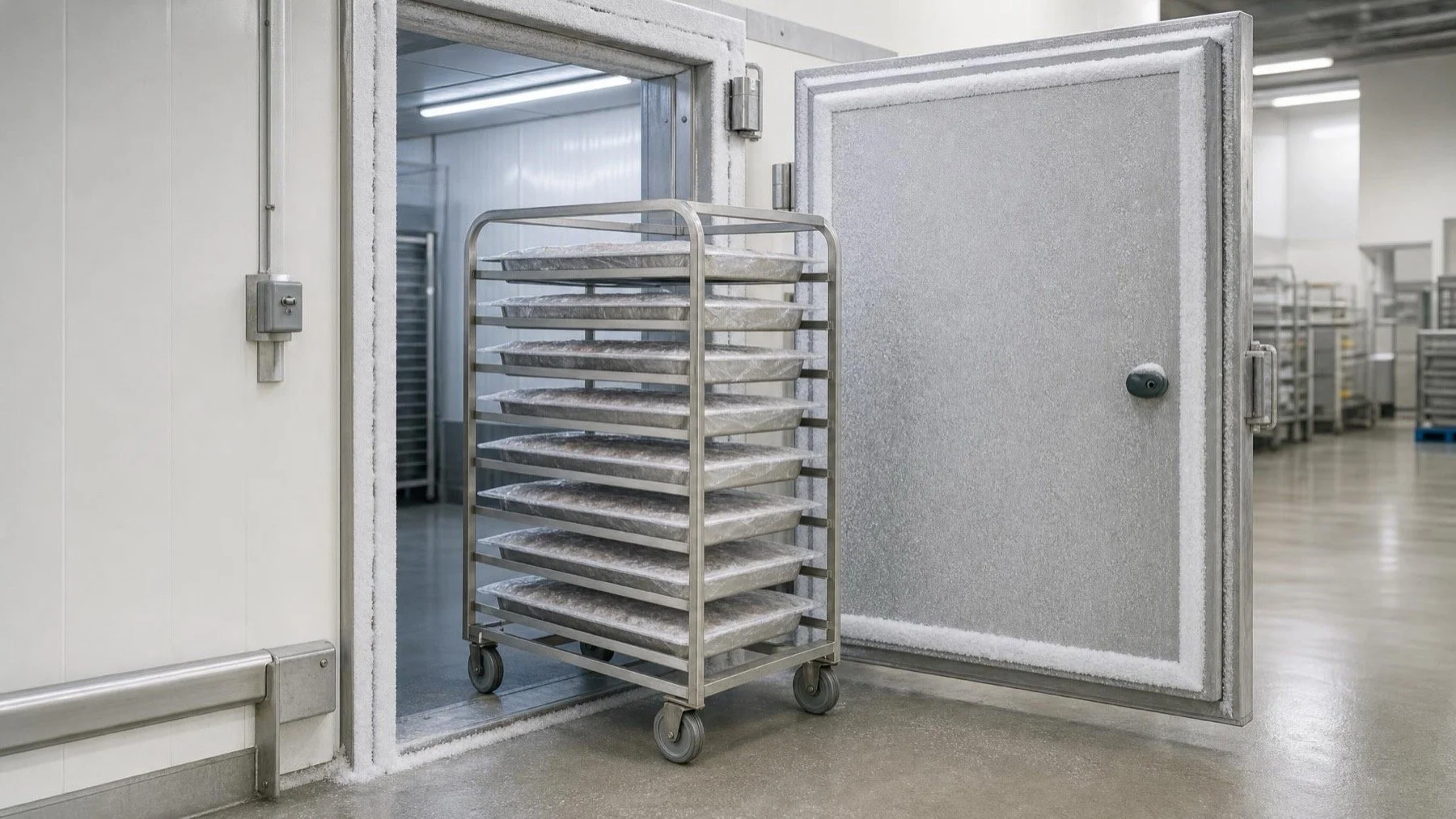
A blast freezer and a walk in freezer do different jobs, and the difference shows up in the product. A blast freezer pulls heat out of fresh or cooked product quickly, then hands it on to storage. A walk in freezer holds product that is already frozen and keeps it there. If your kitchen or plant is rolling warm trays into the holding room and waiting overnight for them to firm up, storage equipment is doing production work. This guide will help you decide whether you need dedicated blast capacity, a blast cabinet beside the freezer you already have, or simply a better sized holding room.
Why freezing speed changes the product
The case for fast freezing starts with ice. Water that freezes slowly can form fewer, larger crystals, while fast freezing can form more and smaller ones. Fast freezing generally causes much less damage to cell walls, and the benefit grows with the rate of freezing. That is why producers of meat, fish, dough and portioned meals pay attention to freezing speed rather than only to the final storage temperature.
The second reason is the room itself. A holding freezer is built to keep a steady temperature with the door closed for most of the day. Load a rack of warm product into it and the air temperature climbs, the frozen stock on nearby shelves takes on some of that heat, and the refrigeration runs long to recover. NRCan guidance lists the speed at which cooling or freezing must occur as one of the things to know before choosing walk in refrigeration. Treat that speed as a design input and put it in the brief before anyone draws panels.
Batch size decides between a cabinet and a room
Blast equipment is sold as cabinets that take trays and pans, and as rooms that take loaded racks or pallets. The right scale comes from your production rhythm rather than from the size of your kitchen. Answer these questions for your busiest production day before you talk to any supplier.
- How much product goes in per batch, and in what form: trays, hotel pans, boxed cases or full racks?
- What temperature does it enter at? Product straight from the oven or kettle is a very different load from product that has already been chilled.
- How many batches run per shift, and does the next batch have to wait for the first one to finish?
- Where does frozen product go next: packing, a holding freezer or a truck?
A bakery freezing a few sheet pans of dough at the end of the day may be well served by a cabinet. A commissary sending racks of portioned meals through on a schedule usually needs a room with a door wide enough for those racks and a short path to holding. When the answers point to a room, plan the blast space and the holding freezer together, because the door between them and the route the carts take will shape both.
Where a blast room fits in the building
We build production scale freezer rooms and dedicated blast freezers for Toronto food manufacturers, commissaries, and meat processors. In that kind of plant the blast room usually sits between production and frozen holding, with the shortest possible run for carts and a door sized for the largest rack. A threshold that carts can roll over without lifting matters more here than in a storage room, because the door may open for every batch.
The floor needs the same attention. Our freezer builds include electric heat tape under the floor panels to prevent frost heave. Refrigeration is the other half of the decision. We size each refrigeration package to the target temperature and the actual product load. For blast duty, that load is set by the batch rather than by the room volume. Fast freezing can also put a lot of moisture onto the coil, so ask how the defrost system for a freezer coil will keep up with the production schedule.
Operator's refrigeration decision: blast capacity or more holding space
If product reaches you already frozen and the real problem is shelf space, a larger holding room or a combined cooler and freezer build may be the better use of the budget. If product goes in warm, and its quality or your production schedule depends on how fast it freezes, plan blast capacity on purpose instead of borrowing it from storage. Our custom walk in freezer builds cover both kinds of room. We offer custom freezer builds and installation across Southern Ontario, including Toronto and the GTA. Operators inside the city can see the rooms we build on our Toronto walk in cooler and freezer page.