
Cold Rooms for Breweries and Beverage Producers
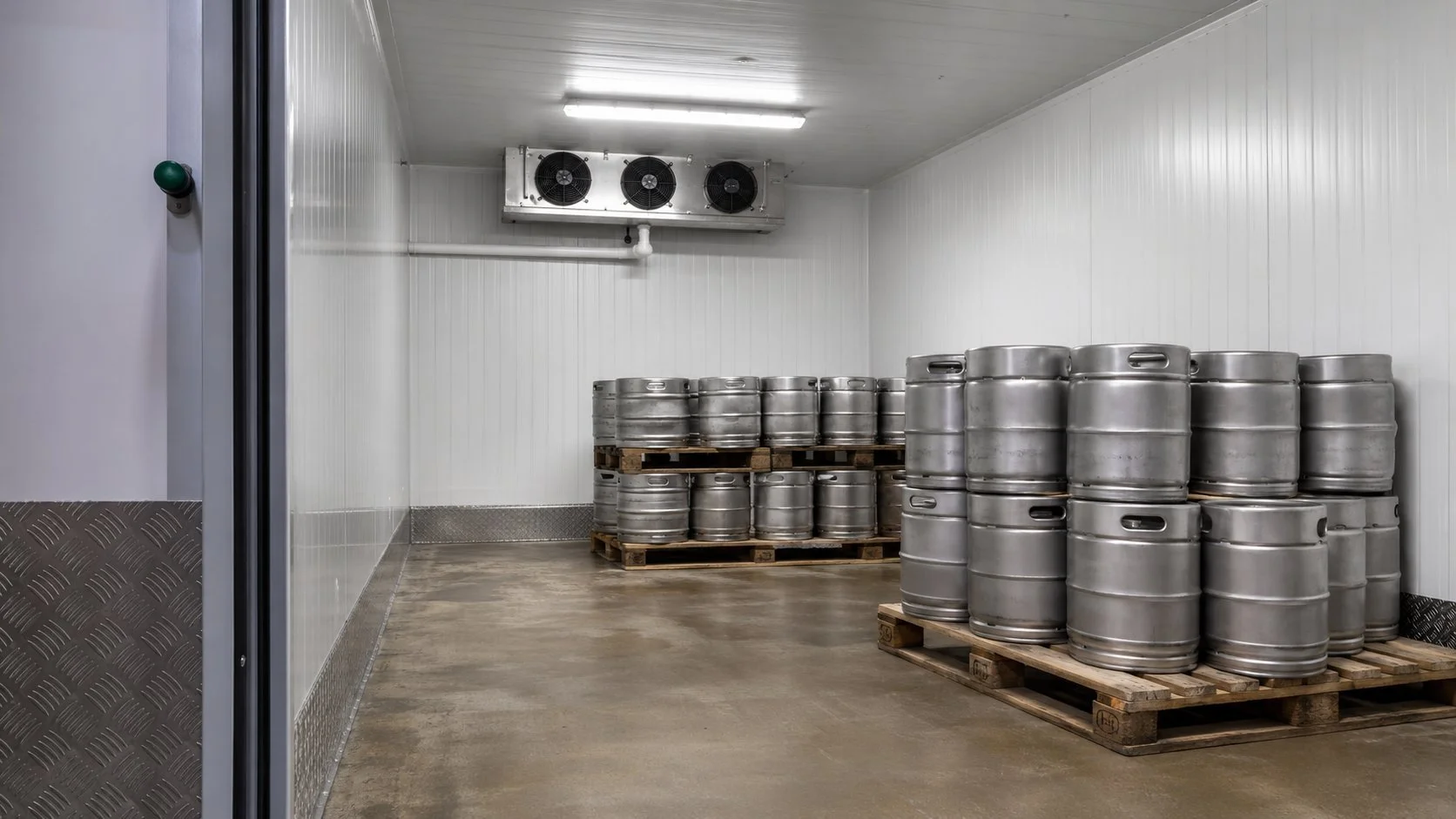
Breweries run on cold. Fermentation wants control, conditioning wants patience, and finished beer wants to stay exactly as the brewer left it until the moment it pours. For craft breweries, cideries, and beverage producers, the cold room is production equipment, not storage.
That changes how it should be built. Here is what goes into a brewery cold room that earns its keep, from a builder that has worked with Ontario producers, including the cold room work when Junction Craft Brewing relocated, planned so production did not stop.
What a brewery cold room has to do
A brewery cold room usually carries several jobs at once. It holds finished kegs and cans at serving-ready temperature. It conditions and lagers beer that is still becoming itself. It protects hops and other sensitive ingredients. And in taprooms, it often feeds the draft lines directly.
Each job has a temperature it wants, and the mix changes with the season and the production schedule. The design question is not how big, but what jobs, at what temperatures, at peak.
Keg storage is a weight problem
Full kegs are heavy, and they arrive stacked on pallets. That makes the brewery cold room a floor project as much as a cooling project: an insulated floor rated for pallet loads and pallet jack traffic, with a flush threshold so full pallets roll in level. Racking for kegs needs anchoring and layout that keeps FIFO rotation possible when the room is full on a Friday.
Fermentation, glycol, and the room around it
Most breweries chill fermenters and brite tanks with a glycol system, and that is separate from the cold room. But the two live together in the same building, and the design should respect that. Tanks that stand inside a cold room need service access and drainage around them. Glycol lines that cross the cold envelope need proper sealing where they penetrate the panels. And the heat that all that refrigeration rejects has to go somewhere that is not the room next to your condensers.
A producer planning growth should plan the cold envelope for the five-year layout, not the current tank count. Panel-built rooms can be expanded, and custom builds can zone temperatures so lagering and keg storage each get their number. The panel construction that makes that possible is the same cam lock system behind our cold storage warehousing projects.
Floors, drainage, and washdown
Breweries are wet. Kegs drip, lines get flushed, floors get hosed. The cold room floor needs slope and drainage, sealed wall junctions, and surfaces that shrug off daily washing. This is standard food-plant thinking, and it is where beverage cold rooms differ most from a dry-goods cooler.
Draft lines and taproom service
Where the cold room feeds draft towers, the room placement is part of the beer quality. Short, well-insulated line runs from the cold room to the taps pour better and waste less. That argues for putting the cold room close to the taproom wall at design time, a decision that costs nothing on paper and everything in a retrofit.
Building it without stopping production
Breweries cannot pause for construction. The build plan has to work around brew days, deliveries, and the taproom's hours. Panel construction helps: rooms go up fast once the floor is ready. When Junction Craft Brewing moved, the cold storage transition was planned so production kept running through the relocation, which is the standard any producer should hold a builder to. A proper professional installation scopes the sequencing with you, and relocation services exist for the day your brewery outgrows its first home.
FAQ
What temperature should a brewery cold room be?
It depends on the job. Keg and can storage, conditioning, and ingredient storage each have their own targets, and many breweries zone the room or run more than one room so each job gets its number.
Can a cold room hold fermenters?
Tanks can stand inside a cold envelope, but most breweries chill fermenters with glycol and use the cold room for conditioning and finished product. If tanks live inside, plan service access and drainage around them.
What kind of floor does a brewery cold room need?
An insulated floor rated for palletized keg weight and pallet jack traffic, with slope, drainage, and washdown-ready surfaces, plus a flush threshold so pallets roll in level.
Should the cold room connect to the draft lines?
Ideally, yes. Placing the cold room against the taproom wall keeps draft runs short and well insulated, which pours better beer and wastes less of it.
Can you build a cold room without stopping our production?
Yes. Panel-built rooms go up quickly, and the build is sequenced around your brew and service schedule. Relocations can be planned the same way.
Do you work with producers outside brewing?
Yes. Cideries, kombucha and beverage producers, and food processors run on the same cold room logic: zones, floors, drainage, and reliability.
Building or expanding a brewery, cidery, or beverage operation? Titan designs and builds production cold rooms across Ontario, 500+ installs since 2013. Request a free quote or call (416) 896-7153.