
Cold Storage Redundancy: Planning for Critical Refrigeration Loads
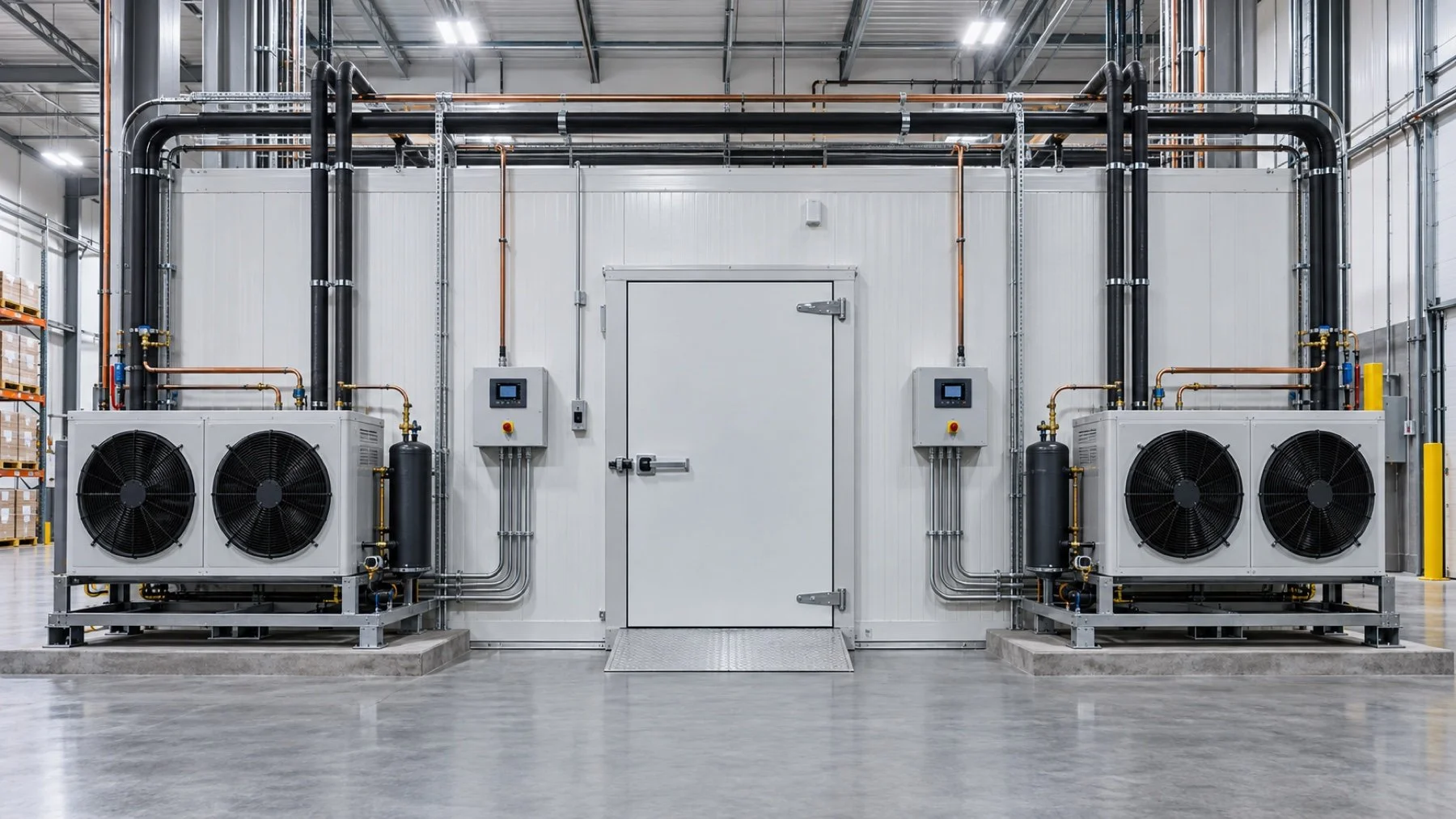
Cold storage refrigeration redundancy is not simply buying two of everything. It starts by defining the product loss, temperature excursion or operational shutdown the facility cannot accept. Titan helps operators translate that risk into room separation, refrigeration capacity, controls and service access for cold-storage projects in the GTA and Southern Ontario.
Define the failure the design must survive
A redundant system can still share a single electrical panel, condenser, controller, refrigerant circuit or room. List credible failures one by one: compressor shutdown, fan failure, control fault, power loss, blocked access or planned maintenance. Then decide which loads must continue and for how long.
Separate critical inventory before adding machines
Two independent cold rooms can protect inventory from a door, panel or evaporator problem that duplicate compressors on one room cannot solve. Product zoning also lets staff move the highest-value or most temperature-sensitive stock first. The layout should include the temporary capacity and aisle access needed for that move.
Use capacity that works at the design condition
Standby capacity has to carry the defined critical load on the hottest design day, not only during mild weather. If multiple compressors share duty, confirm how capacity changes when one is unavailable. Controls must stage equipment without hiding a failure or creating unstable short cycles.
Power and controls need their own resilience plan
Extra refrigeration equipment does not help through a building power outage unless the power strategy supports it. Map normal feeds, transfer equipment, generator capacity where provided, alarms, sensors and communications. Keep monitoring independent enough to report a refrigeration failure rather than disappearing with it.
Maintenance access is part of redundancy
A standby circuit that has not been exercised may not start when needed. Build rotation, alarm tests and service isolation into the operating plan. Give technicians room to work on one circuit while the other runs. Titan's commercial refrigeration installation service can coordinate these details with cold storage warehousing solutions and custom walk-in freezers. Start a redundancy review with an inventory-risk and facility-utility summary.
Write the recovery sequence beside the equipment concept. Name who receives the alarm, who can isolate a failed circuit, where product can move and what information a service technician needs. Redundancy becomes useful only when the physical system and operating response cover the same failure scenario.
Source check: Condensing units span small walk-ins through industrial cold storage and can integrate monitoring. Review Copeland condensing units.
Redundancy planning questions
What does N plus 1 refrigeration mean?
It means the system includes one more capacity unit than the number required to carry the defined design load. The boundaries and shared components still need review.
Are two compressors always redundant?
No. They may share controls, power, condensers or piping that create a single point of failure.
Can a second cold room improve resilience?
Yes. Physical separation can protect inventory from enclosure, door or evaporator failures that affect one room.
Does redundancy require backup power?
Not always, but power loss must be part of the risk assessment. Extra refrigeration capacity cannot operate without a suitable power source.
How often should standby equipment be tested?
Set a documented exercise and alarm-test schedule based on equipment guidance and the facility risk plan.
Document the inventory that must stay cold, the failures the facility must withstand and the available power strategy. Titan can use that risk statement to scope room and refrigeration options.