
Walk In Cooler Relocation: Decide What Can Travel
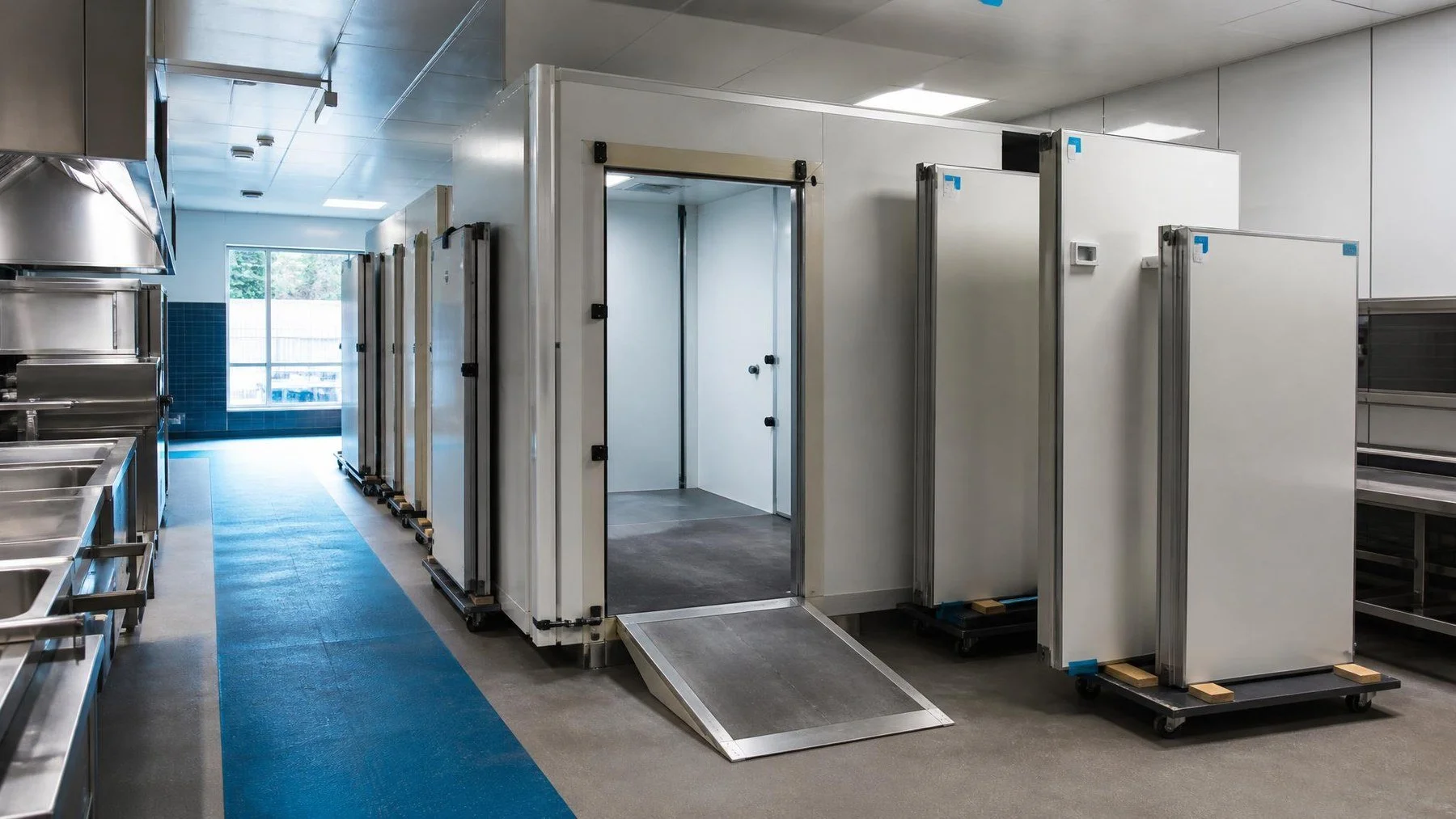
Illustration of cooler panels staged beside a commercial kitchen cold room. The actual move plan depends on both sites and the condition of the room.
Walk in cooler relocation works when the equipment is sound and the room, refrigeration and utilities fit the new site. The decision depends on more than whether the panels come apart. Your stock also needs a safe place to stay while the equipment is disconnected and rebuilt. At Titan, we assess both locations before recommending what should travel. If your business is moving within the GTA or Southern Ontario, make that assessment before you book the equipment move.
Start with the destination, not the old room
An existing cooler was designed around one floor plan. At the new address, check the clear space the assembled room will occupy, the route that every panel must travel to reach it, and the swing of the door once the kitchen is operating. A room that fits on a drawing can still block a prep route or leave too little access for equipment service.
The refrigeration package needs its own review. Ask where the condensing equipment can sit, how lines will reach the room, what power is available, and whether the existing system is suitable for the new layout and expected stock load. These are site questions, not things a moving crew can settle at the loading dock. Titan's relocation service begins with an assessment of both locations for that reason.
At a Toronto restaurant, access may mean a narrow back corridor, a shared loading area or a stair route. At a warehouse, the difficulty may be the distance from receiving to the new cold room or the equipment path above it. The assessment should use the actual route, not only the dimensions of the finished room. Titan's Toronto walk in cooler projects show the range of commercial settings in which that fit decision matters.
Measure the room as an operating space, not an empty rectangle. Mark where staff will approach the door with a cart, where deliveries will be set down and which side needs access for service. Then trace the path of the largest panel from the truck to its final position. If that path turns through a narrow doorway or shared corridor, the moving plan needs to account for it before anyone dismantles the old room.
Ask the destination landlord or project team which work is already included in the new premises. An available electrical panel does not establish that the required connection is in place. An open area on a floor plan does not establish that the floor, drain arrangement or equipment location is suitable. Titan can assess the cooler, but the owner still needs a clear handoff with the people preparing the site. Record those responsibilities beside the move date.
Decide which components have another useful life
Panel condition deserves more than a quick look at the visible faces. The joints and edges determine whether the enclosure can be taken apart and assembled again without carrying damage into the new room. Photograph any damaged area before disassembly and ask how it will be handled in the proposed scope. A panel that appears serviceable while the room stands may reveal a problem when its connection to the next panel is exposed.
The door has a separate decision path. A sound enclosure with a door that does not close reliably may call for door or hardware work, not a whole new room. Conversely, a fresh gasket alone does not solve an opening that is out of alignment. The quote should distinguish a seal replacement, hardware work and a change to the opening. That distinction makes it possible to compare the cost and risk of reuse against replacement without pretending every problem is a panel problem.
Refrigeration equipment needs its own fit assessment because the new site changes the distance, placement and operating context. Supply model information and maintenance records, then ask whether the existing package can support the proposed room and how its performance will be checked after reconnection. Do not assume that a system working at the old address will perform the same way after a different installation. If the answer is uncertain, identify the inspection or calculation needed before selecting the reuse option.
Compare the three choices on one scope sheet
Put the options side by side: move the complete room, reuse selected components, or install a new room. For each, list the enclosure, door, refrigeration work, destination preparation, stock plan and final testing. This is a more useful comparison than three total prices with different work hidden underneath them. It also makes an omission visible: if one option has no allowance for preparing the new site, the quotes are not yet comparable.
Plan the shutdown before a panel is removed
The room cannot protect inventory while it is apart. Decide where chilled or frozen stock will go, who will move it, and who will confirm that the holding arrangement meets the products' requirements. Do not promise the kitchen a reopening time before the destination services and equipment condition are known.
Refrigeration and electrical disconnection belong in the planned scope. For common halocarbon refrigerants, Ontario says a certified technician must handle removal and disposal. That work is not a step for an ordinary mover. Titan's relocation service describes systematic disconnection, panel labelling, protected transport, reconnection and performance checks. The practical point for an owner is to coordinate those trades before stock leaves the old site, so a missing circuit or inaccessible route does not become a surprise on installation day.
Build the sequence backward from the day the new room must accept stock. First confirm the destination is ready for the enclosure and services. Next agree on the stock holding arrangement and empty the old room. Only then should disconnection, dismantling, transport and reassembly proceed. Leave time after reconnection for performance checks before anyone treats the room as available inventory space. The amount of time required depends on the equipment and the work found on site, so use an assessed plan rather than an assumed overnight changeover.
Assign one person to coordinate the handoff between the operating team and the installation team. The operator knows which products must remain accessible and which deliveries cannot be postponed. The installer needs a clear room, an accessible route and prepared services. If those needs conflict, resolve the stock and access plan before the scheduled shutdown. This is especially useful for a restaurant or food business that intends to keep another part of the operation running during the move.
At handover, ask for the room to be checked against the operating brief supplied before the move. Record the target temperature, the observed performance after reconnection, any component changed during reassembly and the person who accepted the work. The business can then decide when to move stock from its temporary holding arrangement. Keep the equipment information and updated layout with the maintenance records. The next service visit should not have to reconstruct what changed between the two addresses. Record the agreed stock return point on the handover sheet so the operator and installer share the same decision if testing takes longer than planned.
Settle the open questions before the old room comes apart
Before approving a quote, ask for the assumptions behind it. Which measurements were taken at each site? Which components have been inspected and which still need to be opened up? Who is supplying the destination services and who will verify them? What happens if a panel, door or refrigeration component cannot be reused after disassembly? An answer to each question turns the quotation into a working plan and reduces the chance of a late change when the old room is already apart.
Also decide who has authority to approve a change during the move. If a damaged panel is found, that person needs the condition documented, the repair or replacement option explained, and the effect on the handover sequence. The moving team should not have to guess whether the business prefers a temporary pause or a different component. This decision path is especially important when the old lease ends soon after the planned shutdown.
If a new enclosure is the better choice, ask Titan to compare the proposed move with a new walk in cooler installation at the destination. The comparison should use the same stock brief, access route and performance requirements. That keeps the decision focused on the operating room your business needs after the move, not on the sunk cost of the room it is leaving.
Titan can assess the existing cooler and the proposed location before you commit to the move. Send the room details, destination plan and timing through the Titan quote form, and ask for a recommendation on what should travel and what should be rebuilt.