
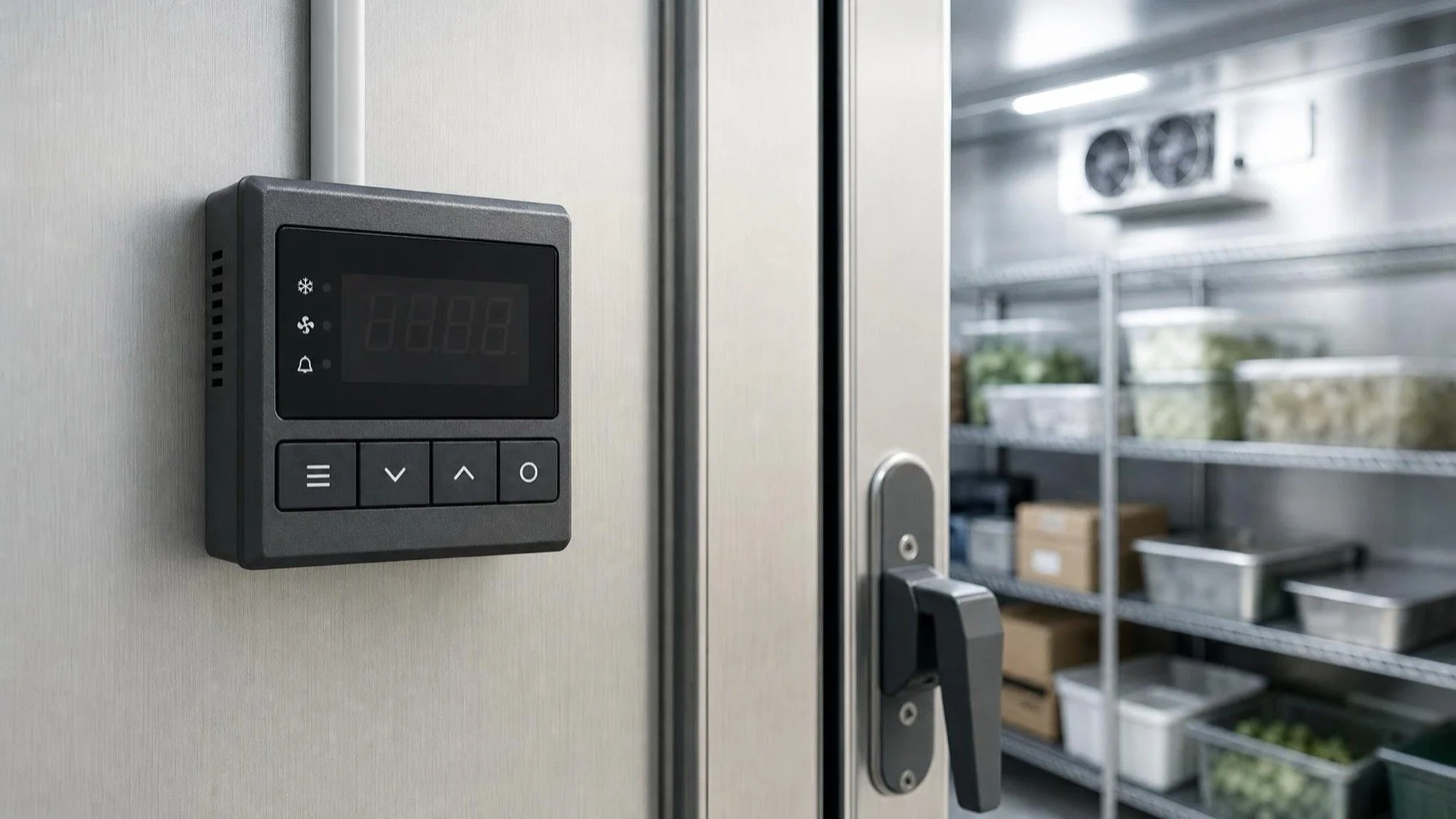
Picture a Friday delivery. The display on the cooler shows the room sitting on its setpoint, yet the cases on the top shelf by the door feel warmer than they should. The walk in cooler thermostat is not wrong, but it only reports the air where its sensor sits. That gap between the reading and what the product is doing is where many control complaints start. This article explains what the controller is actually deciding, why the sensor location changes the number on the display, which settings belong to staff and which do not, and what to specify when a new room is built.
What the controller is actually deciding
In a simple room, the thermostat watches air temperature and calls for cooling when the room warms to one point, then stops when it cools to another. The spread between those two points is the differential. Set it too narrow and the compressor can start and stop in short bursts. Set it too wide and the product sees bigger swings than it needs to. A digital controller makes the same call but adds jobs that used to need separate parts: a defrost schedule, a delay before the fans restart after defrost, alarm limits and a record of what happened overnight.
That is why we treat the control as part of the refrigeration system rather than an accessory. Our refrigeration installs include evaporator coils, thermostats and digital controls matched to the box. The controller decides when the condensing unit runs, how long the coil spends in defrost and what the evaporator fans do between cycles. NRCan guidance includes a refrigeration system override for off peak hours among the controls that can reduce energy use. An override like that only helps if its settings suit the way your room is loaded.
Where the sensor sits changes what the display tells you
A sensor mounted in the cold air leaving the coil reads colder than the room. A sensor near the door reads every opening as a warm spike. Neither reading is false, because each describes one place. For control, a sensor in the air returning to the coil can give a steadier picture of the room, since that air has already passed over the product. For records and food safety checks, a probe that measures product temperature, or a simulated product probe, tells you more about the food than any air reading.
When staff check temperatures by hand, take the reading from the product, in the same spots each time, and note the time. Our guide to managing cooler temperature for freshness and safety covers that routine in more detail. If the hand readings and the display disagree in a consistent pattern, question the sensor location before anything else.
Settings staff should and should not touch
One person should own the setpoint, and the keypad should be locked or password protected if the controller allows it. Turning the setpoint down to catch up after a delivery rarely helps. The compressor is already running while the room recovers, so a lower setpoint mainly lengthens the run afterwards and can chill product near the coil harder than intended.
The differential, defrost frequency and duration, fan delays and alarm limits belong to whoever designed or commissioned the system. They are set from the size of the coil, the load on the room and the defrost method, and changing one usually affects the others. If a room cannot hold temperature with sensible settings, the cause is usually load, airflow, door seals or refrigeration sizing, and a qualified refrigeration technician should look at it. Our article on what determines refrigeration load explains how those pieces fit together.
Operator's refrigeration decision: specify the controls with the room
When a new room is planned, decide on the controls at the same time as the panels and refrigeration. Ask for a high temperature alarm with a delay long enough that a normal delivery does not trigger it, a door alarm if the door tends to be left ajar, logging that someone will actually review, and remote alerts if the business is closed overnight. NRCan guidance also lists automatic evaporator fan shut off whenever the door is opened as an option that can reduce energy use. That is worth raising in rooms with heavy door traffic.
Commissioning is where those choices get proved. On our builds, the room is pull down tested and temperature verified, and staff get a walkthrough of the controls before handover. We install the refrigeration behind walk in coolers and freezers for businesses across the GTA. Our commercial refrigeration installation work treats the box and the refrigeration as one engineered package. Restaurant operators can see how that applies to service kitchens on our Toronto restaurant walk in cooler page.